

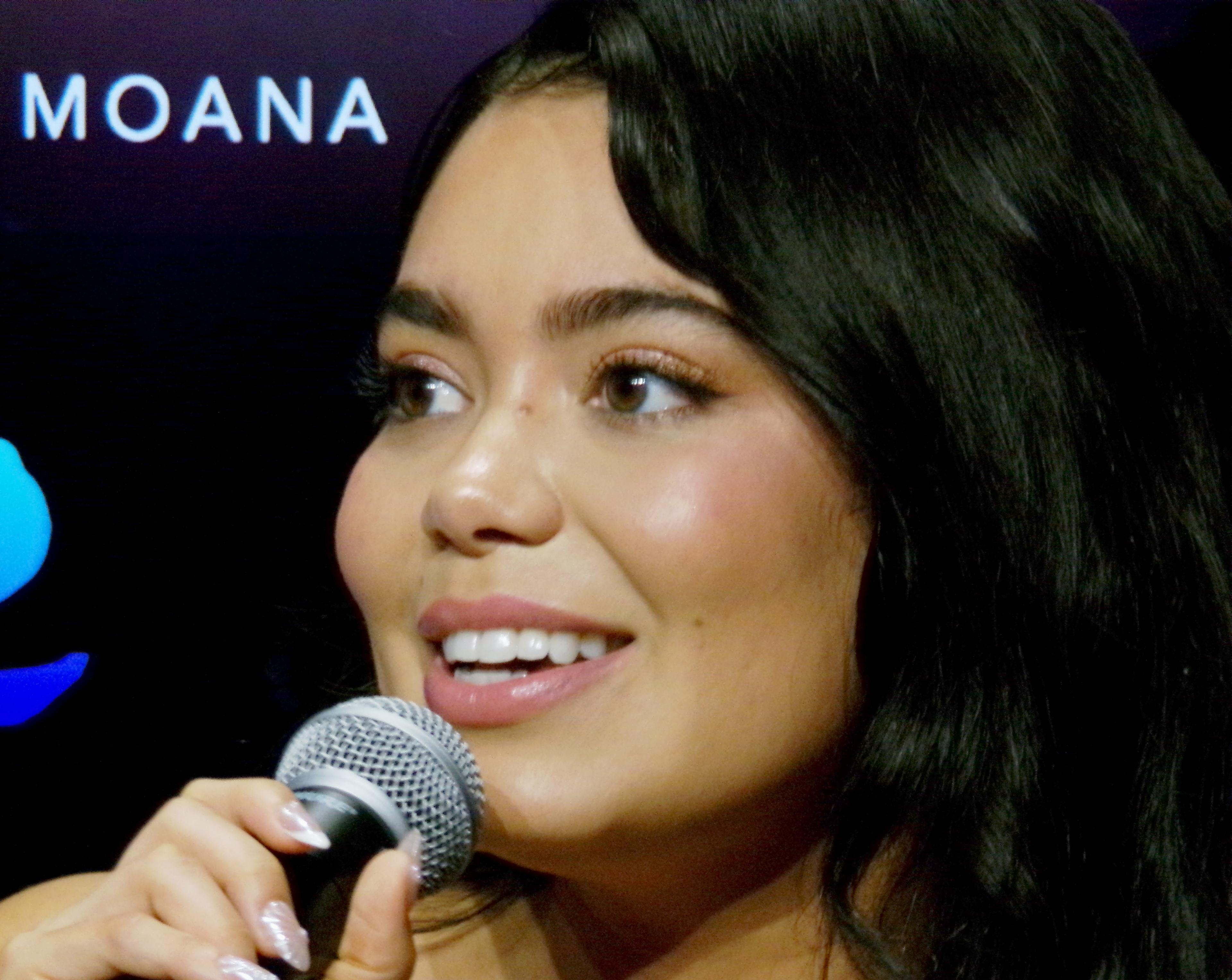
Auliʻi Cravalho’s route from Moana to Serendipity
The reported casting puts a performer known for animated adventure and live musical theater in a different kind of ensemble.
The title Serendipity arrives with a ready-made idea of the movie. The 2001 romantic comedy followed two strangers, played by John Cusack and Kate Beckinsale, who meet and leave the possibility of another encounter to chance. A new film with that title has an audience already thinking about missed connections and whether a near miss can support a whole story. Casting Auliʻi Cravalho gives it a reason to make that idea travel somewhere other than straight back to 2001.
Variety reported that Cravalho has joined the new film in development at Amazon MGM Studios and Miramax. Michael Showalter is attached to direct, and the reported ensemble includes Milo Manheim, Whitney Peak and Stephen Kalyn. The trade coverage describes a new set of characters. It leaves unanswered what Cravalho's character does, who she plays opposite and when a finished film might arrive. Those are meaningful gaps. They leave room to consider the casting on the basis of the work Cravalho has already done.
Many people first heard her as Moana. Others met her as Janis in the 2024 Mean Girls musical, or saw her take over the role of Sally Bowles in the Broadway revival of Cabaret. The jobs demand different things. In one, the voice has to carry into a body the artist will never occupy. In another, a character has to enter a social world where everybody thinks they know the story. Onstage the audience is in the room and an actor returns the next night to do the whole thing again. That movement between formats makes a sharper introduction to her than a list of roles ranked by how widely people recognize the title.
The work inside a familiar voice
Disney's Moana is an unusually durable introduction for a young performer because a voice can become bound to a character long before the audience has learned who made it. In animation an actor can supply a great deal of the sense that a body is sitting, pulling, running or pausing, while a team of artists builds the image and the environment around it. A sung performance then carries some of the same character into the moment when simple conversation can no longer do the job.
Cravalho's Moana belongs to a story that gives the character reasons to feel several pressures at once. She has obligations at home, something she wants to understand and an urge to travel. The performer has to make those pressures sound connected so that courage can feel like something the character arrives at. A voice that only sounds determined would make the voyage easy to predict. The moments where a listener can hear uncertainty are part of how the movie gives the decision weight.
That familiarity creates an opportunity and a constraint for the work that follows. People who encounter Cravalho in another film may bring a long memory of a younger audience's story with them. It belongs to the audience as much as to the actor by that point. The next part can use that memory for a moment and then ask viewers to make new associations. Cravalho has done that by stepping into characters who are less interested in being immediately understood.
Janis brings a point of view into the room
The 2024 Mean Girls follows a story that several audiences already know, from the earlier film or from the stage musical. Its Janis has the genre's useful privilege of knowing more about the social rules than the newcomer does. She can describe the system with apparent authority and still have reasons of her own for wanting to see it disrupted. Put that perspective in a musical and it gives the actor more than one way to communicate where the character stands.
For Cravalho, the job as Janis was a shift in where a character gets her strength. Moana often has to articulate an impulse she can't yet justify to other people. Janis comes equipped with conclusions about the world she's looking at. Those conclusions have to sound sharp enough to help orient the audience, and partial enough for the story still to have somewhere to go. That's a good kind of role for someone trying to keep an audience from bringing too simple an idea of her from another movie.
Familiar material makes that balance visible. Viewers may arrive waiting for a scene or number they already remember from a previous version. An actor can satisfy some of that attention and still change where it lands. Is the character asking the room to agree with her? Does she already know what one person is about to say? Is the joke for the friend beside her or for herself? These are small decisions, and a performer makes them inside a story that an audience thinks it knows.
A role that has to work again tomorrow
Then there is Sally Bowles. The Internet Broadway Database records Cravalho as a replacement Sally in the 2024 Broadway revival of Cabaret, from September 16, 2024, through March 29, 2025. A replacement joins a production whose physical arrangements and underlying rhythms already exist. She also inherits a famous role that has lived through different interpretations. What she does has to make sense in the production on that night, with that audience and those other performers.
The job underlines why a stage credit can tell you more than the name of a show. A screen performance is assembled from choices made over many moments. A person on stage has to shape what the audience understands about Sally across an evening, with the audience seeing the transitions as they happen. A moment of assurance and a loss of it can be only a few beats apart. The work includes maintaining the relationship between those beats as the conditions in the room change.
Sally also places Cravalho in a story where performance is part of the character's everyday life. That's distinct from a movie that simply lets its characters sing their feelings. An audience can be watching someone attempt to hold a room and wondering what she has left once the room has stopped looking at her. For a performer whose breakthrough came through a voice heard by people nowhere near the recording booth, a run playing a character with a live audience inside and outside the story is an especially interesting addition to the record.
There is also a difference between watching an already famous character return and watching a performer enter a genre with a different set of expectations. A romance has to make space for another person's response. A glance held for an extra second can signal attraction, impatience or recognition depending on who is set up to see it. Cravalho's musical roles make expressive choices of a larger kind easy to identify. A conventional conversation, where no number will come along to resolve the rhythm, could make the smaller choices easier to see.
What a contemporary Serendipity can ask of its cast
A new Serendipity has a structural question before it even sets someone up to miss a train or walk into a shop at the right minute. Modern communication makes it possible to search for someone with relatively little information. A story about chance has to decide how chance survives in that environment. It could give its characters different reasons for holding back, different accounts of what happened, or simply a different understanding of when trying to find someone becomes an intrusion. The most interesting obstacles might have less to do with whether a person can be found than with whether they want to be.
That's one reason the reported new ensemble matters. The original title can bring people to the project. Multiple actors with different rhythms give a writer and director ways to make the characters' choices feel current. A performer who can be convincing when she withholds an answer, then equally convincing when she changes the energy in a room, can help the story make something of the distance between two encounters. Cravalho's work across voice, musical film and theater supplies examples of her operating at different scales. Which one the new movie needs will depend on the part.
Showalter's involvement gives the cast a director with several kinds of comedy and romance on his résumé. The title itself gives him a movie that already has a relationship with audiences. Neither fact settles what this version will be. A returning premise gets interesting when it makes someone reassess something they enjoyed about the original. A name on a casting announcement gets interesting when you can imagine the actor shifting the balance without having to know exactly where the plot will put them.
The concrete news right now is modest. Cravalho has reportedly joined the new film, and more details will follow as the project moves. The territory her career has already covered makes that a welcome development. One of the pleasures of a performer moving across formats is discovering what remains recognizable when the job changes. Audiences who first knew the voice have had other chances to find out. A new romance built around an old idea is another place to watch what she does with recognition, surprise and the seconds before two people decide how much to say.