

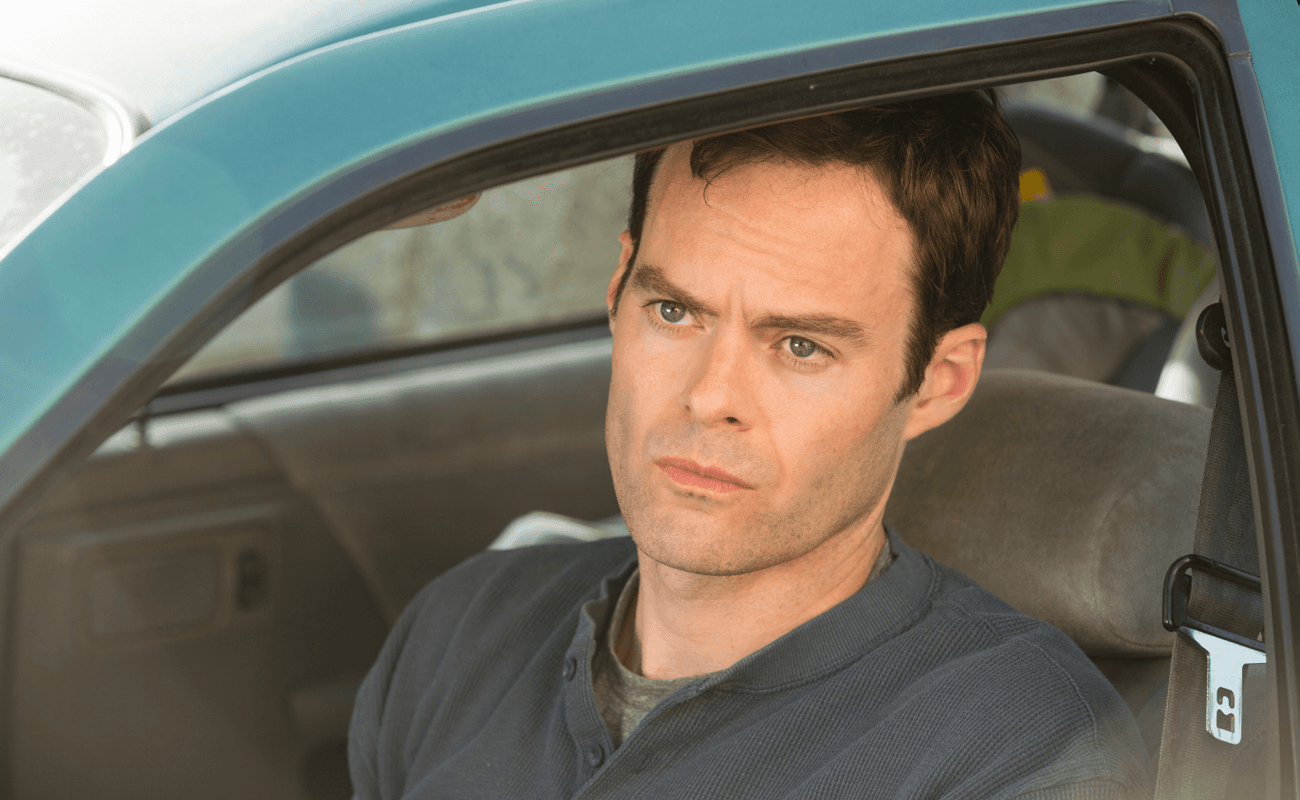
From Barry to They Know, Bill Hader takes a familiar kind of panic into horror
Black Bear has acquired North American distribution rights to Hader’s first feature as director, a psychological horror film co-starring Linda Cardellini.
A man sees someone else becoming important to his children and starts to look for an explanation. One explanation is that a family has changed and he finds the change painful. A second is that the new person in the family is doing something to them. Bill Hader's They Know begins from a suspicion along those lines, according to coverage of the film's distribution deal. The subject is familiar enough to make both the suspicion and the man doing the suspecting worth watching.
Black Bear has acquired North American rights to the film from MRC. Hader wrote, directed and stars in it alongside Linda Cardellini. Trade and entertainment coverage describes the film as his feature directorial debut and says it is in post-production. The acquisition gives the film a distributor in a named territory. It leaves the release date open, and there's more to learn about the film itself once it has footage available to the public and a date for audiences.
Hader's experience makes the premise more interesting. He spent years on Saturday Night Live, where a performance has to find its rhythm quickly enough to tell a room how to listen. He co-created Barry, played the title character, and directed episodes of a series that could move from comedy to a different kind of unease in the course of a scene. They Know puts him inside another story about someone generating explanations for his own behavior. Horror gives those explanations somewhere more disturbing to go.
A premise the audience can enter two ways
The published premise describes a divorced father growing suspicious of his ex-wife's new partner and concerned about the influence on their children. Almost everyone can imagine a mundane version of that feeling. A child comes home with an expression or a new rule that originated in another household. A conversation starts with a detail someone else already knows. The parent who used to be present for those moments now has to infer what happened from the pieces they get later.
That is an effective place to start a psychological horror film because the account doesn't have to sound outlandish at first. There is something to observe. The question is what kind of evidence each observation represents. A new adult might simply have a relationship with the children that is meaningful outside the father's knowledge. They could also be seeing something he needs to take seriously. The less certain the information is, the more the father's need to act can shape what he chooses to believe.
The audience has a version of the same problem. We can sympathize with a character because of the effects of the arrangement on him while remaining skeptical about the inferences he draws. A filmmaker can make that distinction difficult without making it impossible. Show too much too soon and the uncertainty becomes a puzzle already solved. Show too little of the other people in the family and the story loses part of what makes its tension plausible. The most gripping possibility is a set of people who each have a stake in what the rest believe.
The press description is a starting point for those questions, and there is plenty it doesn't establish. It doesn't give viewers the particulars of Cardellini's performance or settle how much information the point of view permits. What it offers is a situation with consequences even if the father's theory changes. No member of the audience needs to believe the worst to see how much damage could come from one adult deciding they must be right.
What Barry showed Hader could do
Barry often invited people to watch an apparently ordinary behavior from more than one angle. The central character could be so invested in a story he told about himself that the effect on others was almost incidental to him. Comedy could make the self-description sound absurd. Violence and dread could make the same description feel serious without making it any more reliable. That tension gave Hader's performance and his work as a director something specific to play with.
A useful part of that lineage is timing. An actor can give an explanation that sounds completely reasonable until the camera waits for another person's response. A joke can make an audience relax just long enough to register something unsettling in the room. The move works because timing determines whose reaction we see and when we get to see it. Those are decisions applicable to a domestic horror film even if its sense of humor takes a different form.
One can also see why audiences would come to this film expecting the comedy to matter even if there are few overt jokes. A performer known for comedy can evoke the expectation of a punch line and hold it off. A person trying to make an anxious conversation sound casual may become funny because we know what they are doing. What follows can change that recognition. The unease is often in the distance between what the speaker thinks got across and what everybody else in the scene just saw.
A feature imposes a different task from a series. A series can spend time establishing how its characters tend to behave, then ask the audience to remember those habits years later. A film has a more limited amount of time to establish a pattern and disturb it. A father encountering a different version of his family life offers an opportunity. The situation gives the audience a pattern it already recognizes, so the movie can spend time on the point at which the pattern starts to feel wrong.
Why the second lead matters
Cardellini's casting also gives the project a history beyond Hader's. Her career includes ensemble drama and comedy, including Freaks and Geeks and Dead to Me, where the story frequently depends on how much a character is prepared to tell another person. A performer who can put warmth and defensiveness into the same interaction is useful in a story that asks the audience to take multiple interpretations seriously.
The stakes of an ensemble horror film are often clearest when the people outside the primary perspective have motives the audience can understand. In this case there is already a strong temptation to let the premise reduce other people to what the father fears they are doing. The casting is a reason to pay attention to how the film distributes attention. If its other characters register goals of their own, their actions can remain legible and still raise uncomfortable questions for the lead. The finished film will show how much room Hader makes for those contradictions.
A conversation about a debut directed by its star can spend a lot of time on the novelty of the credit. The more consequential question is what the director allows the rest of the cast to know. With the right balance, the audience can see one person having a reasonable reaction to a changing family and another making an equally reasonable choice based on different information. Suspending that balance so the audience has to keep considering both accounts is a deliberate kind of work.
Cardellini's television work also illustrates a quality an audience might bring with it to this film. Viewers who know her from those ensembles have had time to see characters accumulate a history before their judgment about them changes. A horror movie can borrow the benefit of that recognition in a glance. The viewer may enter inclined to hear her version of a scene out. The film can honor that tendency, use it to complicate the father's account or see how long it survives when the available information gets worse.
For the distributor, part of the challenge will be deciding who gets the first look at the material. Hader may be a name comedy audiences recognize before they register the premise. Horror audiences might find the situation interesting without caring about his earlier credits. A campaign can bring those groups together if it sells the specific fear at the center of the movie and gives the two leads room to suggest what that fear costs.
What the Black Bear deal tells us
Distribution advances a project in a way a casting announcement can't. The buyer will have a role in how the film gets presented to audiences in the territory it has acquired. A psychological horror film can be introduced through its director, its performers or the hook of its premise. Lead with any one of those elements and someone may show up looking for a different kind of movie.
The reporting says the deal covers North America and that the film is in post-production. Those details tell a reader it is further along than an announced project still looking for a cast. They don't supply a calendar or a review. The next concrete pieces are a confirmed release plan and the first material that shows how the people in the film behave together. It is also worth watching whether the marketing sells certainty about the nature of the threat or gives the film's central ambiguity time to establish itself.
For now, They Know makes sense as a move from television to feature directing for Hader. Its premise gives him room to develop pressure among a small group of people, and Cardellini gives the project another reason to be interesting on the performance level. The most productive question to bring to a first look is what the movie lets us see before the father decides what it means. A good psychological horror story can inherit an everyday fear and make it harder to tell where that fear ends. This one's first promising choice is picking a fear that could have hurt the family before it became a theory at all.