

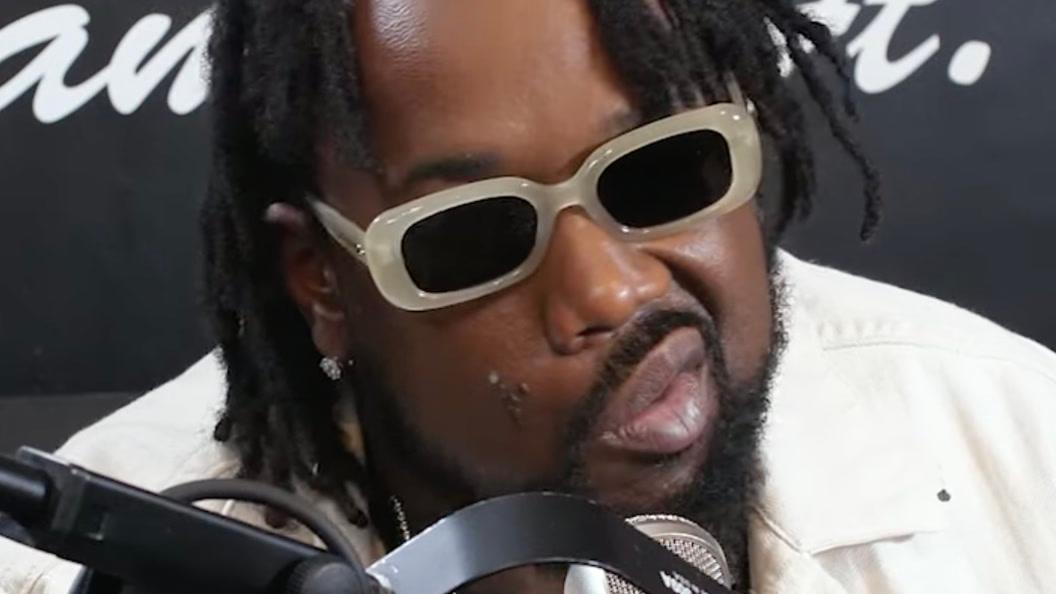
Conway the Machine puts the surprise at the end of OTIS
The Buffalo rapper’s new Drumwork album puts Ghostface Killah, Raekwon and Method Man together on one song. Then Daringer and Goo Goo Dolls co-founder Robby Takac take the record somewhere else.
On the last song of Conway the Machine’s OTIS, the credited guest is Robby Takac. Daringer makes the beat, according to Apple Music’s album notes. That is an unusual set of people to find on the same record, even before you remember Takac’s role in the Goo Goo Dolls and Daringer’s formative work in the Griselda orbit. The distributor’s track listing and the publicist both name Takac. Apple Music’s editorial description instead names his bandmate, so the billing here follows the release credit. There is a temptation to look at those credits and jump directly to the unlikely pairing. Conway makes you wait for it. “Grease paint!” is the closer on his 11-song album, released November 20 on Drumwork under license to Roc Nation Distribution. A listener who has gone through the whole record by then has already been given several solid reasons to believe Conway knows exactly how his usual register works.
Earlier on the album, another guest combination arrives with a different sort of weight. Ghostface Killah, Raekwon and Method Man are together on “Lupita!,” over production Apple Music attributes to Conductor Williams. Kool G Rap shows up on “Cobra!” Those bookings draw on traditions of character-driven, densely written New York rap. Put together, the songs make the record’s last turn feel stranger in the best way. This album has ample company inside the tradition most listeners associate with Conway. It can afford to invite somebody who changes the emotional grammar of a chorus.
Before the guitars
The important credit on “Lupita!” is easy to overlook with three Wu-Tang members sitting in the same title. Conductor Williams has the job of making one production accommodate people known for being recognizably themselves. In a posse cut, the point of bringing together distinct writers is usually that one set of details gives way to another. A performance can feel crowded when the arrangement keeps asking for the same approach from every artist. The underlying beat has to leave each arrival enough room to reset the register. Read the production credit alongside the features and you begin to see that the cohesion of a song like this is its own achievement.
There is a structural reason “Cobra!” works as a companion in the track list, even for listeners who are primarily drawn to the Wu-Tang credits. Kool G Rap means another link to a particularly exacting tradition of New York street writing. The match lets Conway place a different kind of audience expectation beside his own verse. A song with three Wu-Tang names on it carries the immediate appeal of a small reunion. A Kool G Rap appearance brings another scale of recognition, tied to the particular sound and density of one veteran’s delivery. Put those two ideas on the same record and you hear more than a ranking of the guests.
Apple Music’s album notes call attention to “1002 corpses!” in the same breath as those collaborations. The point the notes make is that Conway invokes both recognition from his peers and the situations he lived through to get to this stage of his career. That distinction matters because it can be easy for a list of veteran names to make the gift run in one direction. The guest lends attention to the host, in the most obvious version of the story. A younger musician can also help make a veteran’s current performance visible as a piece of work, as opposed to an invitation to remember something from decades ago. The feature has that value when both sides get to be heard.
What Drumwork’s name is doing here
Roc Nation’s store carries a physical edition and identifies the record as a Drumwork release. Apple Music’s credit line gives the license to Roc Nation Distribution. Those are small details at the bottom of pages most people open to hear a song or order a copy. They answer a basic question about where the music goes out into the world, though they have very little to tell us about the terms of Conway’s agreement. A credit line can verify the release relationship without revealing who is owed what. The distinction is particularly important for a rapper whose own business decisions have become material in the music.
In “Diggwutumsayn!,” Apple Music’s notes single out a boast about what Conway says he turned an earlier label advance into. The lyric is useful as a declaration of how he wants to frame his business. It is a song line, neither a balance sheet nor a source for a personal net worth. Album coverage tends to treat big figures as irresistibly quotable proof of independence. The more useful fact this week is attached to the new record itself. Drumwork is in the release credit, and the distribution relationship has its own name. The speech inside the record and the business information outside it deserve to stay in their respective places.
The 10th anniversary of Reject 2, which Apple Music places in the background of Conway’s recent work, makes the issue of ownership especially interesting. A defining mixtape follows a musician around in ways that rarely show up in an album overview. It gives the audience a set of words for describing what it wants back. The sound it helped establish can be a source of leverage and also a place a listener would prefer the artist stay. One of Conway’s privileges now is the opportunity to balance those pressures with sequencing. The record can give listeners the knife-edge writing they came to hear and save its most conspicuous deviation for the end.
Two versions of Buffalo in one chorus
Daringer and Takac make a peculiar pairing if the only map that matters is a map of genres. In Buffalo, the connection is less random. The Goo Goo Dolls formed in the city. Conway’s work with Griselda is one of the reasons a different generation of listeners thinks of Buffalo when it hears New York rap. Those forms are separated by more than a few playlists. They also belong to a city whose musical history is capable of holding them both. “Grease paint!” gives that observation a specific arrangement: a rap producer builds the environment, a rapper delivers the verses and a rock musician contributes the guest part.
Apple Music’s description points to guitar riffs in Daringer’s production. That is a useful thing to notice because it locates the connection before the guest even arrives. A crossover can be experienced as a big name pasted on top of a recording. Here the production credit and the arrangement give listeners a second place to look. Takac does not have to play the sole role of emissary from another kind of music. Daringer has already given the guitar something to do. The chorus gets to complete an arrangement rather than announce that two fan bases have been introduced.
Ending on that chorus also means Conway has chosen an exit that doesn’t have to explain what came before it. Imagine the same song third in the sequence and it would be easy to hear it as an early declaration of breadth. At the close it has a different job. It gives you a new way to hear the familiar producer and the rapper, after both have had the opportunity to build up the expectations the song plays with. This is one of the pleasures an album can still offer when services are ready to put any one track at the front. The chosen order makes an argument about what to do with the surprise.
There is already a smaller precedent for those guitars inside the album. The label’s publicity names Daringer as the producer of “Diggwutumsayn!” and calls out the acoustic guitar against the strings. A listener revisiting the single after the closer can trace that instrument backwards through the sequence. On the earlier song it has to leave room for a fast, densely worked verse. On the closer the arrangement has a chorus to prepare for. The same producer gets to use a related sound for a quite different job, which makes “Grease paint!” feel less like a last-minute detour than a decision the record has already done a little work to accommodate.
Drumwork’s publicity also gives “1002 Corpses!” a guest credit for Inkredible NES, another name worth keeping visible beside the veteran guests. Grouping all the features as displays of stature misses the choices available to an artist building a track list. Two tracks with equally prominent headlines might still have guests at different phases of a career, or performers who ask the production to do different things. The album’s credits provide a better map for tracing that variety than a list ranked by name recognition.
Follow the collaborators through the record
A first listen can start with the Wu-Tang song, because the credit makes it a natural meeting place. A more rewarding second pass is to trace what each collaborator changes. Let Conductor Williams introduce the terms of “Lupita!” before focusing on any individual verse. Take “Cobra!” as a smaller encounter with a different lineage. Spend some time locating the business speech in “Diggwutumsayn!” and hearing how close or distant it feels from the concerns the title Often Times I Suffer invites. Then hear Daringer bring in the guitars and bring in Takac.
At about 40 minutes, OTIS can support both routes. You can come for the old relationships, the hard writing or the pleasure of hearing three Wu-Tang voices meet on a current record. You can also stay for an album that thinks carefully about where to place release after tension. The final song was always going to get attention because of Takac’s name. It makes a stronger case for OTIS because of where Conway put it. Anyone who listens that far has more than one Buffalo sound to carry out of the record.
Sources
- Apple Music — OTIS, release information and track commentary
- Roc Nation official store — OTIS physical edition
- TIDAL — OTIS recording and credits
- Audible Treats — Conway the Machine press materials and videos
- Beatport — Distributor-supplied Grease paint! track credit
Lead image: Supa Cindy / CC BY 3.0 (cropped by Fever). Photo source · License.

More from Fever: Fever’s entertainment coverage