

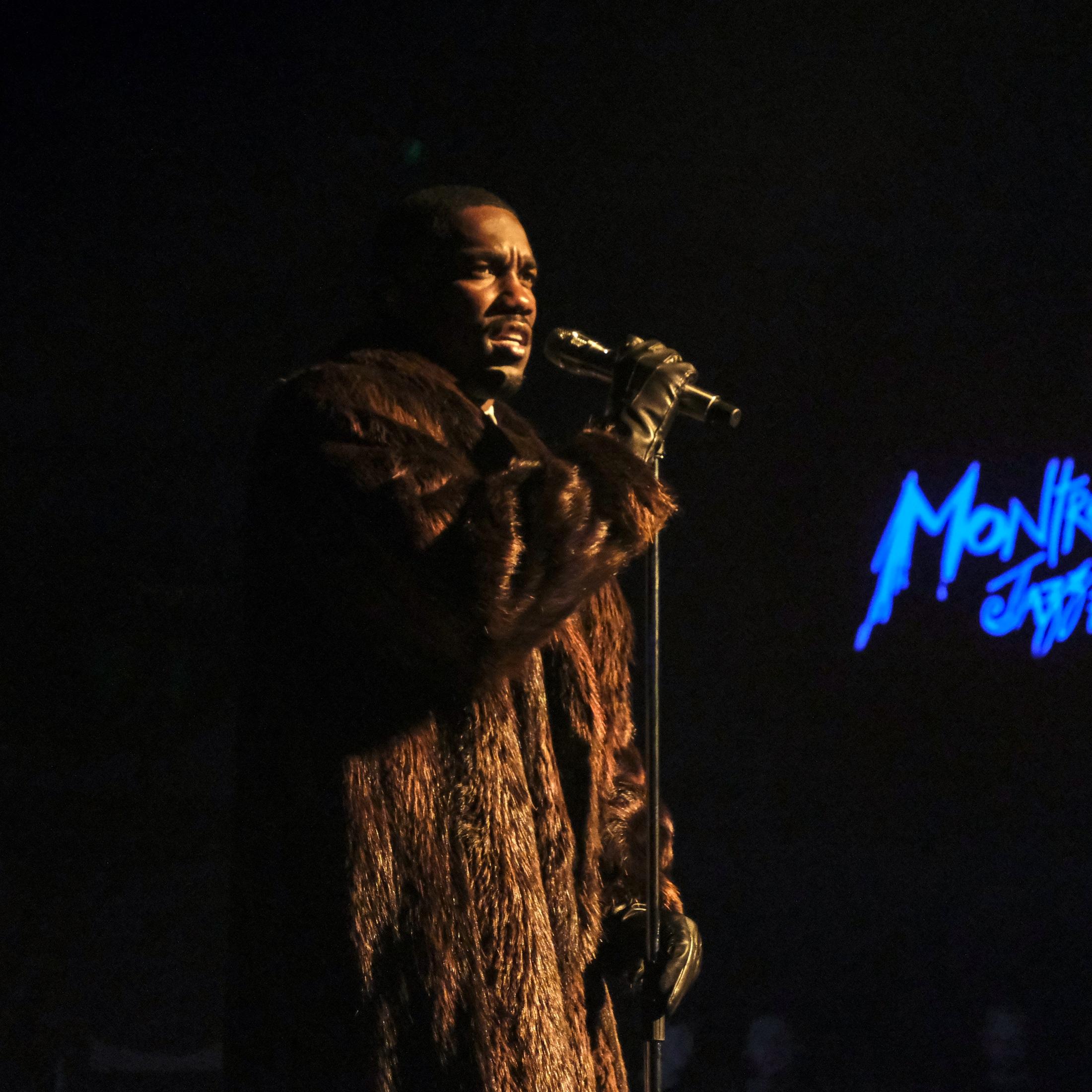
GIVĒON gave “Fast Asleep” a concert hall before the single dropped
The Long Beach singer brought an unreleased song into his Night at the Hall shows. Now listeners can hear the studio version beside the story he told onstage.
A concert built around familiar songs has a useful place for a surprise. GIVĒON used his Night at the Hall dates on opposite coasts to sing “Fast Asleep” before the single arrived on November 20. The LA Phil billed the first evening at Walt Disney Concert Hall for Tuesday, November 17. Release coverage places a second performance at Carnegie Hall on Thursday. By Friday the studio recording was available as a one-track Epic Records release with Not So Fast LLC, accompanied by an official lyric video. Most people will meet the song through that three-minute recording. Its first public setting asks us to think about a different kind of introduction.
The fact that GIVĒON chose a concert hall matters more than the distance between the two venues. In an interview with the Los Angeles Times, he explained that he wanted to put Black music in a conversation about fine art. That was a stated purpose for the Los Angeles show, where the paper reported he worked with a twelve-piece band. The singer had an established touring audience and could imagine returning to an arena. This was an opportunity to ask an audience to attend to arrangement, storytelling and the particulars of a voice from a room organized for listening.
The room was part of the arrangement
The Walt Disney Concert Hall engagement had a different kind of introduction long before the new song came up. The Times reported that the evening began with a seated conversation with a childhood friend and Jimmy Jam. The presence of a writer and producer of Jimmy Jam’s stature makes the conversation part of the musical program. Guests can listen differently when somebody puts the making of a record in the foreground before the first song. The talk also brings some of the personal and working history of an artist into a room where listeners will spend the next few hours with the decisions that history has informed.
That approach fits what GIVĒON had already said about making BELOVED. In 2025, he told the Associated Press that music on the album grew out of band jam sessions, a change from starting with instrumental loops. The AP’s interview identified Sevn Thomas, Peter Lee Johnson and Matthew Burnett among the album’s main producers and reported that GIVĒON wrote on each song. The story of how the record was built is a separate matter from who played any individual part at the Hall. What it does establish is how prominently live musicianship figures in the recent work he was bringing into the space.
GIVĒON’s explanation to the Times also puts a caveat on an easy way to tell the institutional story. A concert hall can change how the music is presented. The skill was already there. The public distinction he was making concerned the company the music keeps in programming, and how a room invites an audience to listen. Music that people initially encounter through playlists, clubs, radio or a clip on a phone can command the attentive silence that a hall makes possible. The show also borrowed something from people who bring their own way of responding into a room set up for a different tradition.
The Times described an especially pointed detail after “Like I Want You.” GIVĒON went to his knees before someone put a coat around him, a reference the paper read as a nod to James Brown’s cape routine. It is a moment specific enough to hold the whole question. There is a crowd that knows the song, some of whom will recognize the stage move, and others who will register a singer letting the last note go before his body finishes the performance. A new song entered a set where the audience had already been invited to read the distance between a record and the way somebody performs it.
A title that waits until the chorus
“Fast Asleep” starts from a familiar shape of thought. Somebody wants to be let in, considers who has a key and imagines what feeling at home with another person might mean. The writing keeps returning to that scale of image. There is a door, an invitation and an idea of what it would be like for the person standing on the other side to stay. This is an intimate proposition for any room, and particularly conspicuous in one large enough to seat an audience for a band.
The lyric video makes it easy to follow how the song moves from the practical question of a key to the comparatively simple image promised by the title. The first verse gives the narrator things to consider before the refrain can settle into its picture of closeness. There is something engaging about putting the feeling in a picture that neither person in the song has to explain aloud. The second verse comes back to uncertainty, so the chorus has more work to do than describe a situation everybody has agreed on. It is where the character gets to try out the idea of being able to rest.
The staging puts a different pressure on a new chorus. An audience that knows the hits has habits around them. It can anticipate the shape of a long note and choose when to answer. A new track gives scarcely any of that advance instruction. The melody and its words have to tell people what a refrain can become on the spot. The sequence of live appearances and the single’s release gave at least some listeners a chance to hear the central phrase before they could read along or return to the same moment several times.
In interviews, GIVĒON has talked about writing toward feelings people consider but hesitate to say. That comes through in the way “Fast Asleep” puts self-conscious questions next to a chorus whose wish is easy to picture. There is a trace of skepticism in the second verse alongside an appetite for change. The distance between those two is worth taking into the earlier work. A listener can start with “Like I Want You,” the breakout song that supplied the Times with its memorable bit of stage business, or hear the newer single beside “TWENTIES,” from the run of songs leading into BELOVED. All three can sustain an audience’s interest before there is a big reveal. A particular kind of hesitation becomes something you can follow.
The staging also raises a practical question about what counts as an introduction. For people in the audience, the song may have been the first unfamiliar thing they heard from somebody whose catalog they know unusually well. For everybody arriving on Friday, the title and the credit appeared before a note played. A lyric video fixes that sequence in its own way. It gives the audience the words without the rest of the evening, inviting attention to the lyric a ticket holder might have heard first as part of a much larger sound.
From a program to a link
The artist’s catalog also helps make sense of what is new about the way this release arrived. A fan looking up BELOVED will find the original album and the expanded ACT II. The current release is cataloged under its own title. It asks for a three-minute commitment and supplies a lyric video that is available on its own terms. So an audience encountering the song on release weekend can get a straightforward version of it without learning the running order of either concert. The same track remains a useful clue to how those nights were designed.
There is a temptation to make every event on two coasts into a larger announcement. The verified sequence is already worth considering. The LA Phil invited people to a specific concert. The singer put unissued material into the week of performances. He told a reporter why the space was important to him. An audience elsewhere then got a recording it could replay. The artist and venue accounts establish those stages of the release. Questions about where the song might live on a future record stay open.
The two versions of access have their own pleasures. A recording allows you to listen closely to a turn of phrase twice within a minute. A ticket asks you to take in a more contingent event. The paper’s account of a crowd and a band helps restore some detail that a small square of cover art has no way to supply. The clip, meanwhile, brings the song to people out of reach of both engagements, those who may know the artist from a different record or who have heard about his interest in older soul and want to see where that attention shows up.
The best reason to consider the live premiere alongside the release is the way each puts responsibility for listening in a different place. At the Hall you had the shared time of the performance, a context furnished by earlier songs and a chance to watch the singer shape a phrase. On the studio version you can stop and return to the point where the verse turns. You can let the track lead back to a whole album or put it on repeat by itself. The two experiences arrive in reverse order for anyone reading about shows they did not attend. GIVĒON has given them a way in, beginning with the smallest available thing, the song he wanted the Hall to hear.
Sources
- Apple Music, “Fast Asleep” single and recording copyright
- Artist’s official release link
- LA Phil, November 17 date and billing
- Kailyn Brown, Los Angeles Times interview and firsthand account of the Los Angeles performance
- BroadwayWorld, single release and two-concert sequence
- Official lyric video as syndicated with original credit and release link
- Gary Gerard Hamilton, Associated Press interview about the making of BELOVED
- Apple Music artist catalog and related recordings
GIVĒON performs at the Montreux Jazz Festival on July 10, 2026. Janeirohy via Wikimedia Commons, CC BY-SA 4.0, cropped. Photo credit: Janeirohy via Wikimedia Commons / CC BY-SA 4.0. Image license. Source image. The photograph was reframed for this edition.
