

Mez puts his own name on Electric Future Gangster
J. Cole and Anderson .Paak join the Raleigh-raised rapper on “Hell Nah.” The debut around it shows what Mez learned from years of directing other people’s work.
By the time J. Cole shows up on Mez’s debut album, Mez has already opened the record with a song called “Function” and introduced another name, “Morris Wayne.” The third track, “Hell Nah,” brings in Cole and Anderson .Paak. There is a clean distinction between where the guest appears and where he can take the record. A lot of people will come in through the two famous names. Mez has decided what those people will walk into when they play the album from the top.
Electric Future Gangster arrived November 20. Apple Music’s U.S. listing gives it 13 songs and about 49 minutes, with Mass Appeal credited under exclusive license from Heirs Entertainment. Mass Appeal identifies it as a debut full-length. The distinction matters if you have followed Mez long enough to know he has issued records under his own name, including earlier work as King Mez. An album debut this far into a career can put a new frame around existing work. Here, one of the best places to see that frame is the relationship with Cole, an artist Mez has also put in front of his camera.
The collaborator across the camera
In an interview with Nessa discussed by DancehallMag in October, Mez traced his directing work back to a period when, by his account, a publishing deal kept him from releasing his own music. The details are his account of the contract and its effect. What can be checked independently is the work he went on to make. He directed Cole’s “Middle Child” video, a job he discusses in a 2024 interview on Creators Club. He also directed his own 2020 video for “Loading,” published with a credits list that names its cinematographer, editors and production teams. A musician who is invited to bring an idea into somebody else’s frame learns how many people it takes to make that idea visible.
“Middle Child” is a useful case because Cole’s hand in the music and Mez’s hand in the video can be followed separately. On the official audio listing the name Juro “Mez” Davis appears in the engineering credits. That credit belongs to the engineer, a different person from the rapper and director. The director’s job comes into focus in the video and in his account of how he got it. It’s easy to let a familiar name on a streaming page collapse different contributions into one. There are few better demonstrations of the limits of that habit than two people both credited as Mez across the work attached to the same song.
Play “Hell Nah” after looking at that older division of labor and the roles are different again. The Mass Appeal release lists Cole and .Paak as guests on Mez’s track. Mez’s song gives Cole a place in a running order he didn’t have to carry. .Paak has a separate job. Peter A. Berry, who interviewed Mez for Rate It Or Love It ahead of release, picked out the lift of .Paak’s chorus and described the track as a moment of release after the seriousness of “Function” and “Morris Wayne.” That observation gives a reason to hear the three tracks together. The guest chorus changes the atmosphere that the first two songs establish.
The sequence does something the feature credit by itself cannot. When a famous rapper drops in on a debut, the verse can feel like a public introduction. “Hell Nah” does some of that work. Putting it third also means the album can ask what changes when Cole arrives. Play the single first and the question may be what the three artists sound like together. Start with “Function” and the question becomes how Mez hands part of the record to somebody else after he has had two chances to place you in his own world.
What the album calls a gangster
Mez had a precise answer when asked what “gangster” meant in the title. In Berry’s November interview he described growing up with a love for records that gave him models for how to carry himself but left limited room for the kid who skateboarded or cared about design. He invoked Child Rebel Soldier, the collaboration between Kanye West, Lupe Fiasco and Pharrell, as an example of people who gave him room to imagine something else. In the interview covered by DancehallMag, his examples of the term extended as far as installing a handrail in his grandmother’s bathtub. That is a specific domestic measure of agency. It says more about this record’s title than looking up how many times its rapper uses the word ever could.
The title also makes more sense once you look at the guest list past “Hell Nah.” There’s “Morris Wayne” with Kal Banx. “Way Too Much” brings T.I. and Deante’ Hitchcock, and UMI appears on “Platinum Fubu.” “Be Mine (H.E.R.)” features LAYA, as the label explicitly lists. That last distinction is handy. A name-sized parenthetical looks like a guest credit in plenty of streaming interfaces. The Mass Appeal entry specifies who is credited as the guest and lets the parenthetical remain part of the song’s title. Between those records there’s plenty of space for melodic singing, different kinds of Southern rap and performers whose presence makes the label’s idea of Mez as a visual auteur feel less solitary.
“Way Too Much” has an origin story that complicates any tidy account of Mez simply directing everything from a chair. He told Nessa, as reported by DancehallMag, that it started as a T.I. record. That makes it an interesting counterpart to “Hell Nah.” One puts him in the place of taking something with another rapper’s involvement already in its history and bringing it into his own album. The other puts a familiar collaborator into a sequence in which Mez has already made the opening statements. The published credits are the starting evidence for understanding those relationships. The interview adds which song he says came from somewhere else first.
What he wants listeners to make out of the title also helps explain why the film work matters to the rap. Directing a video can change what an audience sees when it hears a word it already thinks it understands. A musician arranging an album can make a related decision about what comes just before or after that word. When Mez talks about rethinking what a gangster can be, it is worth looking for that change in who he invites into the record and where he leaves space for them. There is a world of difference between stating you contain multitudes and making the sequence give everybody else a reason to keep listening.
A debut after the first draft
In a release-day interview with Ones to Watch, Mez said he wanted a record he could hand to a stranger in an Uber without a long explanation. He also said that some songs were years old and others only a few months old. Those details make the task of presenting a debut more concrete. He had to decide what counted as the same record across different periods of work. In the same interview, he describes playing bass and piano and producing in Ableton, then talks about what comes from working with producers who bring skills of their own. That is the voice of a director talking about assembly as much as the voice of a rapper talking about a verse. The album he could hand to a stranger had to contain evidence of all those jobs without requiring the listener to know about any of them in advance.
Mez’s early-2020s directing credits also give the new album a revealing hinge in “Still Loading.” His channel released “Loading” in 2020 with production credited to DJ Dahi and Frank Dukes. The video credits place Mez in the director’s seat and identify Heirs Entertainment and AT.LAS Productions as production companies. “Still Loading” is a separate title on the new tracklist. Set them side by side and you see an artist comfortable letting the name of work in progress follow him for years. You can trace that echo without treating the later song as a straight sequel or assuming the same team made it.
The personal way into the album may be “Morris Wayne.” The public way in may be “Hell Nah.” The place I would send somebody who came for Cole is the run from the opener through “Platinum Fubu.” In the label’s running order that gets you from Mez’s opening through Kal Banx, Cole and .Paak, T.I. and Deante’ Hitchcock, then UMI. It is a short span in which one company of voices follows another. Put the biggest feature at the front of a playlist if you like. Put it back where it goes next time and hear the new question the following track asks.
There is one last small sequence choice worth checking on the version you use. Mass Appeal identifies “Southside Cinema,” with Gwen Bunn, as a bonus entry. The label’s shop lists “Goodbye” too. There’s a satisfying tension in naming anything after a track called “Goodbye” and then making it a cinema. It invites a new image after the listener has already heard a potential ending. That may be the most fitting way for a musician-director’s first full-length to carry on beyond its own closing title. The album has a name for the person on the marquee. It has room for another scene after you think the lights have gone up.
Sources
- DJ Connor’s November 20 interview with Mez for Ones to Watch
- Mass Appeal’s digital edition and track credits
- Mass Appeal identifies the project as Mez’s debut full-length
- Apple Music U.S. listing and recording credit
- Peter A. Berry’s November 4 interview with Mez
- DancehallMag on Mez’s interview with Nessa about the debut, the publishing deal and T.I.
- Mez on the “Middle Child” directing job in his Creators Club interview
- J. Cole’s official “Middle Child” audio, with engineering credit
- Mez’s official “Loading” video, with production and directing credits
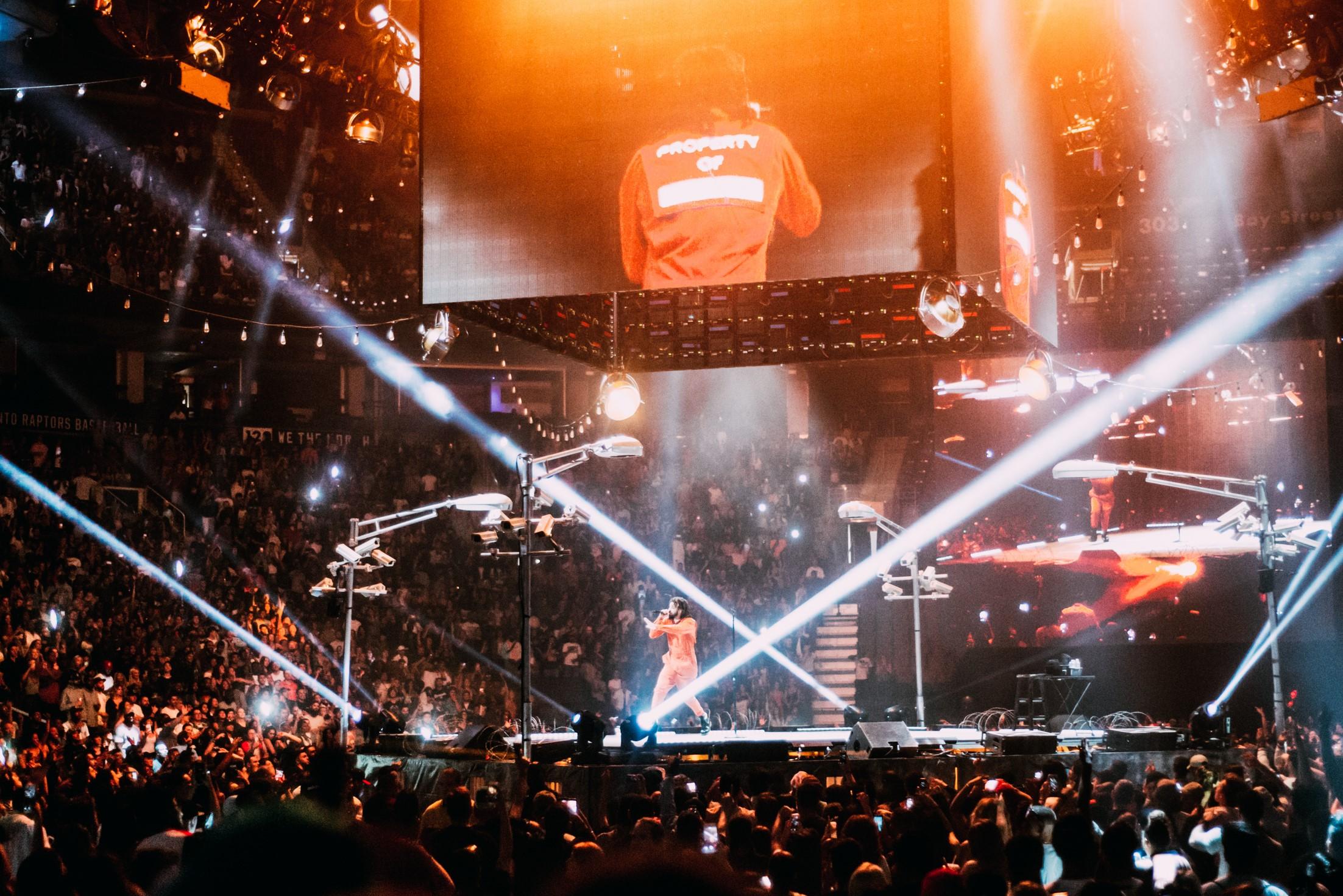
J. Cole performs in Toronto during the 4 Your Eyez Only Tour on July 30, 2017. Cole appears on Mez’s “Hell Nah.” Photograph by The Come Up Show (CC BY 2.0). The Come Up Show via Wikimedia Commons. https://creativecommons.org/licenses/by/2.0/ Source: https://commons.wikimedia.org/wiki/File:Cole_2017.jpg