

The Mosquito Bowl gives its football players one afternoon back
Peter Berg’s World War II drama comes to Netflix November 25. The real game at its center offers a way into the film’s choice to follow four men from college football to the Pacific.
The printed program gives the football game a start time. Two o’clock, Sunday afternoon, Christmas Eve 1944. The venue was Guadalcanal, and the teams represented the 4th and 29th Marines. A reproduction published by the Marine Corps Association even gives the opposing commanders a pregame meeting at midfield. It reads like the kind of orderly schedule somebody might fold and put in a pocket at a hometown game. The care it took to make a football afternoon feel familiar is as interesting as the fact that the game took place at all.
That afternoon supplies the title for Peter Berg’s The Mosquito Bowl, which arrives on Netflix November 25 after an October 30 theatrical opening. The film follows Nicholas Galitzine as John McLaughry, Bill Skarsgård as Bob Bauman, Ray Nicholson as Tony Butkovich and Tom Francis as Dave Schreiner. Berg and the film’s publicity put four former college players at the front of a much bigger group. Buzz Bissinger’s 2022 nonfiction account furnished the material. The trailer and the records around the game suggest two different time scales for the adaptation. The Pacific war unfolds over years. An afternoon of football can feel complete before dinner.
That is an unusual job for the set piece that gives a movie its name. The recognizable sports movie usually has a season inside it, even if that season is compressed into a few scenes. The last game settles a relationship, validates a coach or gives a player an answer about what they can do. The historical game in The Mosquito Bowl sits inside a military story whose next chapter has no obligation to honor a football result. The men can still care what happens on a down. Their ability to care is part of what the movie has to explain.
Four introductions before a team
Netflix introduces the four leads through their college careers and their enlistments following Pearl Harbor. That gives Berg several kinds of familiarity to work with. McLaughry went to Brown. Bauman and Schreiner played at Wisconsin. Butkovich attended Purdue, one of the campuses where Netflix later reported holding a screening. Two of the men already belong to the same college football story before the movie asks an audience to follow them into the Marines. For a viewer just learning the names, Wisconsin is a practical starting point for tracking who shares a past.
The casting also poses an interesting problem of emphasis. Four leads can carry an audience through separate introductions, a training period and a geographic move of thousands of miles. Four leads can also make a much larger group of participants feel like background. A program with regimental names and a pregame ceremony serves as a reminder that the event belonged to a community with its own routines, arguments and audience. Some players arrived with national reputations. Other people gave the event form by organizing it, making a field usable or simply showing up to see what the two teams made of the afternoon.
Galitzine, Skarsgård, Nicholson and Francis enter the story with different associations for contemporary viewers. The useful point of the ensemble is how quickly those associations can give way to the small distinctions that make military and sports stories legible. Who talks first in a group? Who listens to somebody who used to be a rival? Who still understands himself through a team he left behind? A film can establish those relationships through a line, a glance or a decision about where to put an actor in a crowd. The credit list can tell you whose perspective the production has chosen to emphasize. The scenes have to do the everyday work of making those perspectives recognizable.
In a Netflix cast conversation published November 11, Berg moderated a discussion with his actors about their preparation and relationships. Netflix also says the cast encountered major portions of the story broadly in narrative order. That production arrangement gives the actors a shared sequence of experiences to draw from, starting with the athletes meeting and continuing through training and combat material. It is useful evidence about how the film was made. It leaves the viewer to decide how the finished performances communicate the sense of having known one another for a long time.
The field is a location with a past
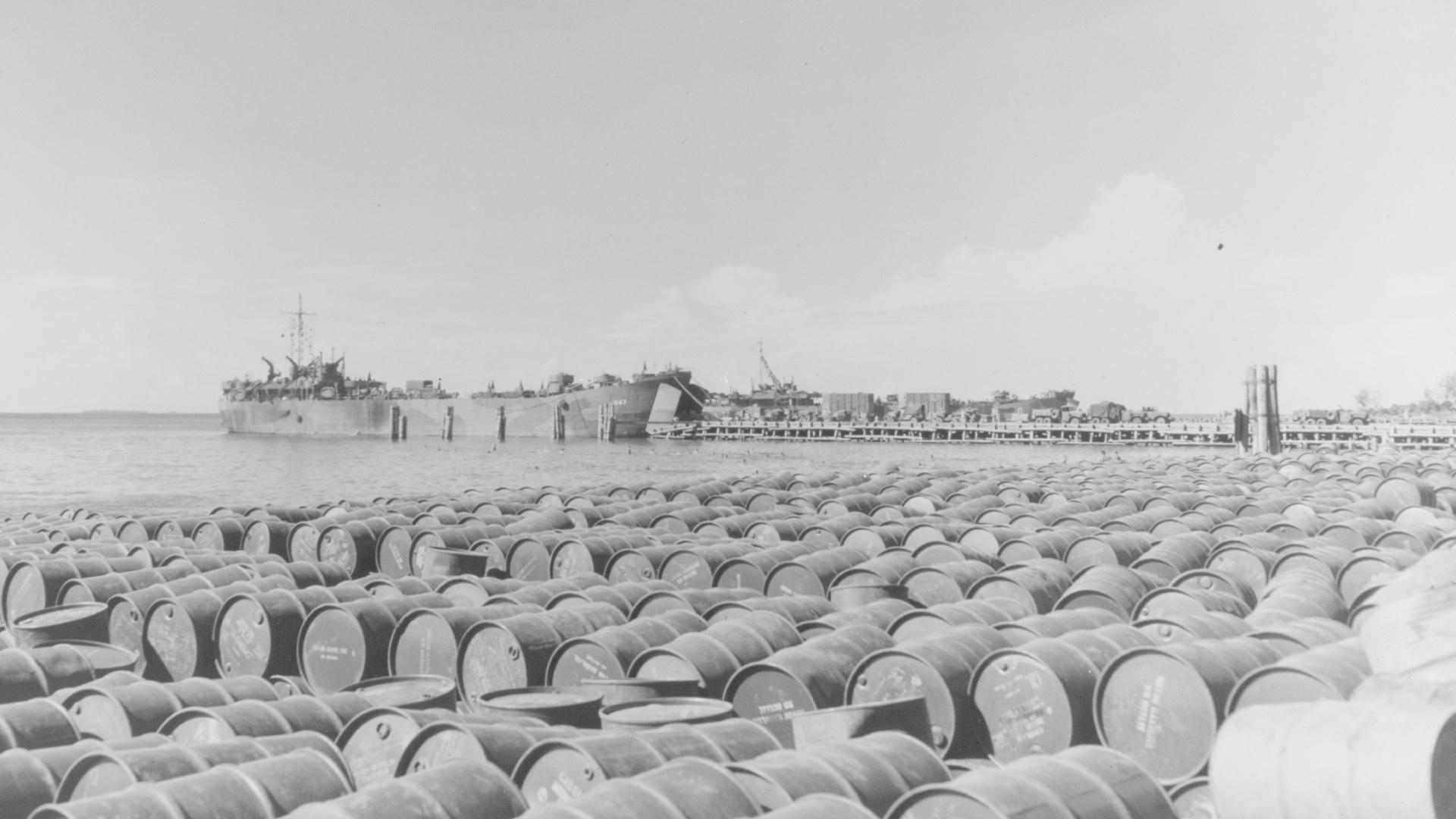
Guadalcanal is easy to flatten into a line in an American war story. In the December 1944 account reproduced by the Marine Corps Association, it is a specific island and the game is a piece of history tied to it. By then the Marines involved were preparing for later operations. The bowl took place more than two years after the Guadalcanal campaign began and months before the Marines’ fighting on Okinawa. Keeping those places and dates separate helps make sense of the stakes. The field was a temporary place for football, a recognizable activity practiced in a place the men had come to for reasons entirely outside the sport.
A title like The Mosquito Bowl can sound almost jaunty on a streaming menu. In the program, the event was billed as the Football Classic. The informal name has stayed with it. The difference is a small sign of who gets to name an occasion. An organizer can give it the ceremonial billing of a college fixture. The name that travels through recollections and eventually reaches a book jacket may tell you something else about how the surroundings felt. Both names help explain why a story about the game has survived in the space where official records and remembered details overlap.
There is also a distinction between the afternoon as the players experienced it and the afternoon as a modern reader approaches it. The documentary record lets a reader look ahead and see that fighting on Okinawa followed. The players on Guadalcanal had an afternoon to get through and a game with a particular opponent. Bissinger’s account supplies the wider trajectories, including the later deaths of men who had participated. A filmmaker has to decide how often to bring the audience’s foreknowledge into the frame. Give it too much weight and it can empty the game of delight. Let the game live on its own for a while and the interruption it offered becomes easier to understand.
That is also a question of geography on screen. A shot of men lining up gives you the scale of a team. A shot that holds long enough to establish the ground, weather or crowd begins to show what it took to play there. The official trailer uses the familiar visual vocabulary of football alongside military material. The full film can give the places more duration. What I’m looking for is whether the geography helps the characters make sense of their moment, or simply tells the audience that the film has changed stages.
A football director’s return to Bissinger
Berg directed the 2004 film Friday Night Lights, also drawn from Bissinger’s reporting, and helped bring its television adaptation to the screen. That history makes their reunion interesting on grounds beyond the sport. A football team puts people side by side who might have different futures and different reasons for wanting to win. It also supplies a shared vocabulary when they have very little else in common. In the Mosquito Bowl material, team identity follows men from colleges into units that have their own history and obligations. The film has a chance to let those two kinds of membership sit beside each other long enough for their differences to matter.
Netflix has already shown the picture to several audiences with direct relationships to the story’s institutions. In its November 12 account of those screenings, the company describes stops involving college programs, veterans’ organizations and service members. Berg and Bissinger took part in a discussion after a screening at the U.S. Navy Memorial Theater in Washington. Purdue’s event gave the production a way to bring the story to people who know that campus and might be encountering Butkovich’s name in a new setting. For a film this broad, the screenings reveal how locally the same material can land.
A streaming audience will come to it through another set of associations. Somebody who knows Berg’s football work may arrive ready to look at how the game is filmed. Somebody who recognizes a cast member may have little reason to know the difference between Guadalcanal and Okinawa. A viewer who grew up around the service may bring a detailed memory of which stories were told in their own family. The publicity gives all of them the same four names and a date. The drama has the harder task of giving each one a reason to learn a fifth.
The original program is worth looking at before the film for exactly that reason. It offers a piece of evidence small enough to take in without already knowing the book or the war’s chronology. Consider who bothered to announce the meeting at midfield. Consider how much of an afternoon people were prepared to spend on the game. Then notice the date and realize how many Christmas Eves have passed since someone expected another person to arrive at a field on Guadalcanal at two. The title of Berg’s film is a way back to that appointment.
Sources
- Netflix Media Center film listing and November 25 release
- Imagine Entertainment production listing and theatrical date
- Netflix Tudum official trailer
- Marine Corps Association history with reproduced 1944 game program
- Netflix cast guide and filming sequence
- Peter Berg’s cast conversation for Netflix Tudum
- Netflix’s November screening report
- Netflix first look and the Berg–Bissinger adaptation history
Fuel and water drums line a Guadalcanal beach during Marine maneuvers on May 18, 1944. The Mosquito Bowl was played on the island seven months later. Photo credit: Pfc. Kenneth Alfather, U.S. Marine Corps / Naval History and Heritage Command. Image license. Source image. The photograph was reframed for this edition.
