

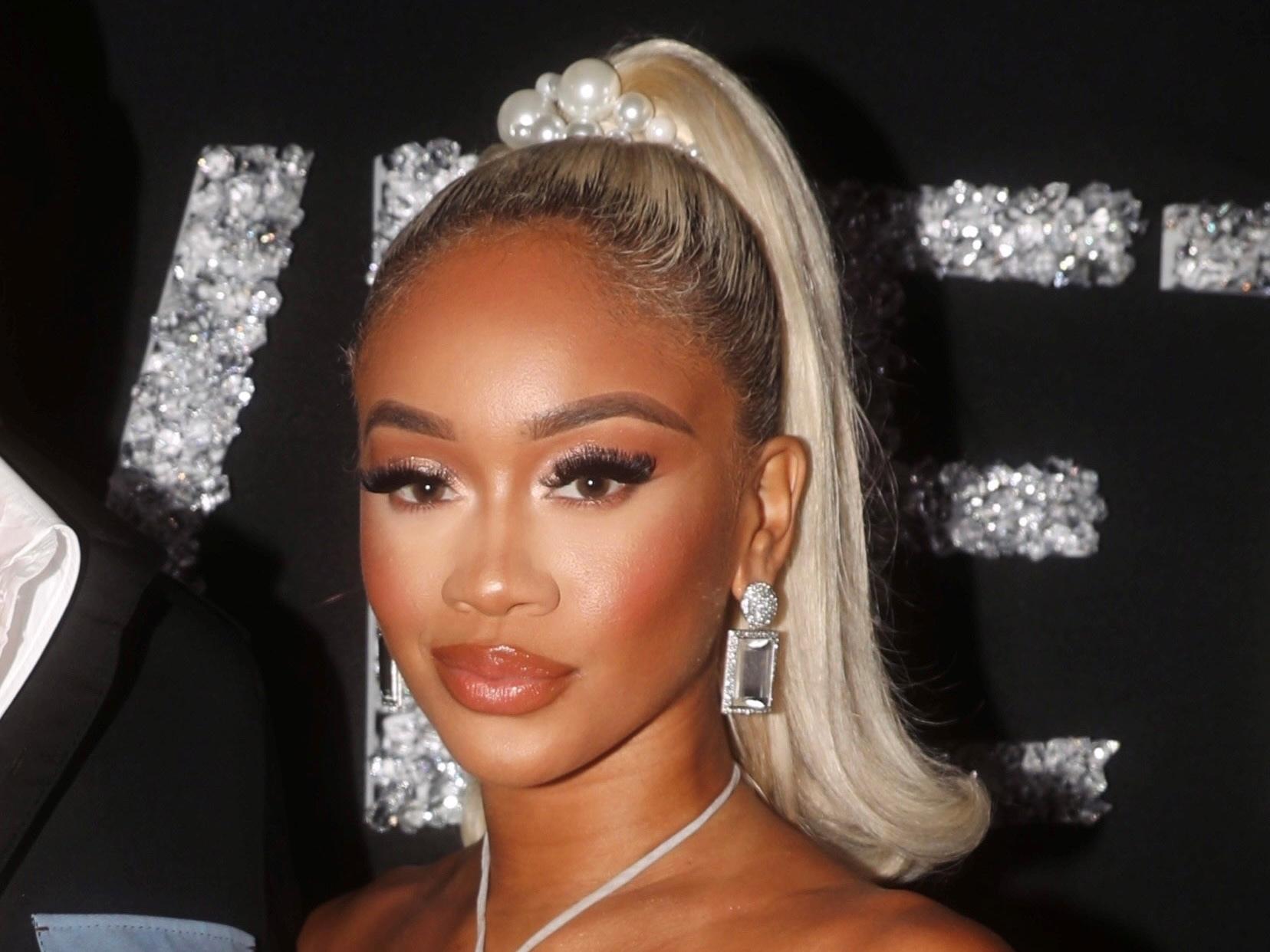
Saweetie gives “details” a second side
The California rapper puts a visualizer on the lead track and a second song right behind it. The two-track release makes a compact argument about who gets to tell the story.
The cover of the blue book says “details.” In a preview Saweetie posted ahead of her new single, she handles the book in white gloves, dressed in black. A glimpse of the track plays underneath. A book is an apt object for a song that turns on people wanting information about its narrator. There is a promise of access in the title and a suggestion of limits in the way the book is handled. Somebody gets to decide when it opens.
That was the invitation for Saweetie’s November 20 rollout, which paired “details” with “in ya face” on a 10K Projects single. The artist’s release page puts the two in that order. Her YouTube campaign gives the title track a visualizer and the second song its own official audio. FEMMUSIC, which published her statement accompanying the release, identifies JD Reid as the producer behind “details.” It’s a small collection, about four minutes in the U.S. Apple Music listing, with just enough room for the shape of a project to emerge.
The release date deserves a little care. Amazon Music’s Canadian listing says November 20, the date used by the rollout coverage and the advance announcement. A U.S. Apple Music listing gives November 19. Taken together, those records support the November 20 campaign date. They leave some uncertainty about the exact moment an individual listener could first play the single in any given store.
The first song gets the book
A track called “details” could advertise a confession. The campaign makes it look more like an argument over access. The object in the preview has a title the audience can read and contents it has to imagine. The image turns a familiar celebrity-news transaction around. A listener comes looking for one piece of information and finds the artist has made the search itself part of the work.
The teaser does a second job in the seconds before the music even has to persuade anybody. The contrast between white gloves and dark clothing makes the hands easy to follow. The blue book can register on a phone before a viewer catches everything about the outfit. One prop does the work of a release date graphic and gives the record a physical object to return to. The campaign’s typography is equally legible. The two songs appear in lowercase on the artist’s link page, so their distinction comes through the words themselves. “Details” names information. “In ya face” names a distance that has collapsed.
That placement puts the second title to work before a listener reaches the track. The first might be an invitation to lean in. The second moves toward you. A release with one song could sustain the first pose all the way through its campaign. A second lets it register as one expression within a more complicated attitude. The short gap between the two is part of the point. You can run the whole sequence back before deciding which direction feels like the larger departure.
Release material printed by FEMMUSIC casts the songs as a deliberate return. Saweetie describes having learned to give herself time to evolve and wanting fans to feel confidence when they hear the music. That is a public statement about the work. The record’s actual presentation offers a more specific place to look for the confidence she is talking about. One song has a named visual object, an artist-channel visualizer and the work of attracting attention. The other is available immediately, with an artist-channel upload for the listener who follows that attention somewhere else.
What the second song can do
The phrase B-side still tells a listener something, even when there is no record to turn over. FEMMUSIC describes “in ya face” that way. The old physical distinction put one song on the side people were expected to know. In a streaming release, it shows up in the order, the artwork and the promotional attention. Somebody who follows the link for “details” can reach “in ya face” with one tap. Somebody who encounters the second track on a playlist gets a perfectly ordinary chance to start there.
The rollout still gives the lead song the visual advantage. If the visualizer becomes the way people identify this release, the paired single preserves a different entry point. The second track can acquire its own listeners without a separate launch, and the pairing remains available to anyone who wants to know what Saweetie put beside the lead. The editorial interest lies in the space between those two experiences. A title can lead a campaign while a companion changes the meaning of the package.
Saweetie knows the difference between a single people encounter alone and a record whose setup is easy to explain in one sentence. “Best Friend,” her collaboration with Doja Cat, gives the listener a relationship to get hold of immediately. The Recording Academy credited both in its Best Rap Song nomination for the track. It’s worth asking what the listener is invited to remember about this new release, too. Here the partnership is between tracks. The main credit stays Saweetie’s, while the move from inquiry to confrontation gives the package two memorable points of entry.
The pairing also has a useful precedent in her own release history. In 2024, Warner Records announced Dear Big Santa as a two-song holiday release. Paired tracks fit the seasonal idea there, giving a listener more than one take on a familiar occasion without asking for a whole holiday album. The new single’s organizing idea is less literal. Put the titles next to each other and something changes about who appears to be asking whom for what. A listener can enjoy the records separately and still hear the shift in stance the package proposes.
There is another practical difference from a physical B-side. The listener who opens either of these titles from the artist’s own release page can see its neighbor before deciding whether to play it. That makes the second song part of the audience’s initial information about the project, even when it never gets played during that first visit. Seeing the two names side by side already changes the scale of the announcement. It sets up a reply and gives the campaign a second phrase people can carry away.
A modest amount of information can carry a release
The 10K Projects line is one verified piece of the new single’s identity. Apple Music prints it next to the recording copyright. The earlier Warner press material establishes who handled earlier campaigns, and the two credits are useful markers for the respective releases. The public evidence goes as far as the recording credit. What a label’s name means for future records, distribution, ownership or any larger agreement takes more documentation than a listener-facing page supplies.
That distinction matters for an artist whose next project can become a story in the gap between songs. The compact package puts a pair of finished tracks in front of listeners. The page tells you what they are called and how to find them. The advance tease tells you what Saweetie wanted the first encounter to look like. Her statement gives an account of the intention behind the moment. Those are enough things to pay attention to before an album title or timetable enters the discussion.
Likewise, four minutes of music let a listener make a choice that a promotional caption cannot make for them. Start where the link intends, with “details,” then let the second track follow. On another pass, start with “in ya face” and see what happens to the invitation in the title song. The meaning of that opening gesture can change once you know how the package ends. Part of the economy of a short paired release is that a listener can try both routes without treating the exercise as homework.
That slight asymmetry also helps explain why a visualizer is becoming an interesting form in its own right. There is enough visual information to give a song a scene or a recurring image. The shorter companion upload puts almost all of the burden on the record’s own timing. If someone remembers where they first saw a clip or opened a link, it can be easy to confuse discovery with what the full package contains. Two official uploads give each track an address and make the distinction clear. The lead’s visual vocabulary can do its job without standing in for the second song’s identity.
There is a broader question here about how established women in rap get returned to the public after a stretch between projects. A bigger announcement often comes loaded with somebody else’s accounting of time away, chart expectations and what any one record is supposed to prove. Saweetie’s earlier releases remain available for comparison in the same storefronts. A reader can put “My Type,” “Best Friend” or the 2025 HELLA PRESSURE material beside what just arrived. There is enough concrete work to consider without assigning a verdict to an entire career on release weekend.
For this particular campaign, the best detail remains the book. It gave the first track a prop with a double purpose. The label on the cover tells you what to ask for, while the gloves and deliberately handled object make it feel as if the answer belongs to the person holding it. The second track gives that person a way to change the terms before the listener has settled into the first. Saweetie could have ended on the invitation. It’s the extra song that gives her a last word.
Sources
- Saweetie’s official release link, with both tracks in order
- Apple Music U.S. listing, recording credit and runtime
- Amazon Music Canada listing, November 20 dating
- FEMMUSIC, release statement, production attribution and both official artist uploads
- InMusic, Saweetie’s advance announcement and description of the teaser
- Recording Academy, “Best Friend” nomination
- Warner Records, Dear Big Santa release announcement
- Saweetie catalog, including HELLA PRESSURE and prior singles
Saweetie in an archival September 2021 photograph. Amywesson via Wikimedia Commons, CC BY-SA 4.0, cropped. Photo credit: Amywesson via Wikimedia Commons / CC BY-SA 4.0. Image license. Source image. The photograph was reframed for this edition.
