
Gadgets Review
Acer Predator Atlas 8 review: the fastest handheld has a price problem
Intel’s Arc G3 Extreme finally gives Windows handhelds a performance lead. At $1,300 — and now $1,450 — the Atlas 8 asks you to pay for every frame.
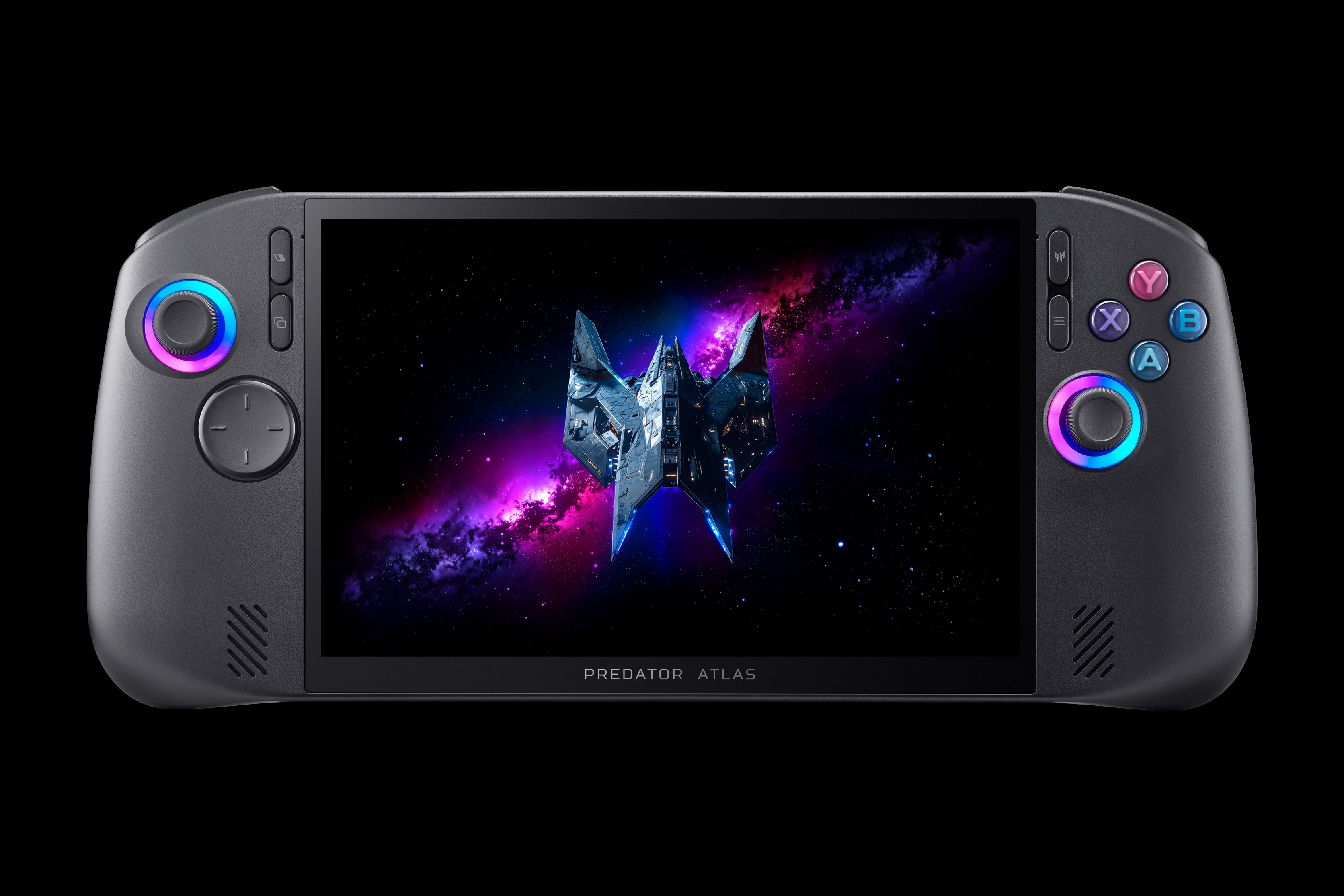
The Windows handheld market has spent two years arguing about the same trade-off: performance, battery, price, pick two. The Acer Predator Atlas 8 arrives with the most interesting silicon in the category — Intel’s Arc G3 Extreme — and the most aggressive price. It is the first handheld that makes a Steam Deck feel slow without also feeling like a compromise in build quality. It is also the first one that makes $1,299 feel like a starting point rather than a ceiling.
Acer launched the Atlas 8 in the U.S. on Nov. 1 at $1,299.99, exclusively through Best Buy. By late November, the listed price had climbed to $1,449.99, a familiar story in a year of memory and storage costs. For that money you get an 8-inch IPS touchscreen at 1920 × 1200, a 120Hz variable refresh rate, 500 nits of brightness, Gorilla Glass Victus, 24GB of LPDDR5X, a 512GB PCIe 4.0 SSD, an 80Wh battery, Wi-Fi 7, dual Thunderbolt 4 ports, TMR joysticks and dual-mode Hall-effect triggers.
The screen is the first thing that sells it. Most handhelds still make you choose between a sharp panel and a fast one. The Atlas 8 gives you both: 1200p is a meaningful step up from the 800p and 1080p panels that dominate the category, and the 120Hz refresh with VRR makes fast games feel smoother than the frame counter suggests. The anti-reflective coating does real work under a lamp, and the 500-nit peak is enough for a bright room. It is the best display on a Windows handheld.
The second thing is the silicon. Intel’s Arc G3 Extreme is a 14-core Panther Lake part paired with Arc B390 graphics and 12 Xe cores. In practice, that means the Atlas 8 can run modern games at 1200p with settings that would force a Steam Deck or an original ROG Ally to drop resolution or quality. Early performance reports put the Atlas 8 at 100–120fps in titles like Modern Warfare 4 and Spider-Man 2 at 1200p, with heavier games like Gears of War in the 70–90fps range. Those numbers depend on power mode, but they line up with the hardware’s position: this is the fastest handheld you can buy right now.
The ergonomics mostly keep up. The Atlas 8 has contoured grips, an enlarged palm rest and an anti-slip texture that makes it feel more like a controller than a tablet with sticks glued on. The TMR joysticks are precise and should resist drift. The dual-mode triggers are a genuinely good idea: clicky for shooters, full analog travel for racing games. The 80Wh battery is large for the class, and Acer rates it at up to nine hours of gaming on MobileMark 2030 — a benchmark number that no one will see in a demanding game. In real use, expect roughly two and a half to three hours at the 35W turbo setting with the screen at 120Hz.
Then the compromises start. The 512GB SSD is the wrong size for a device that can install modern AAA games at 100GB a pop. Acer makes the drive upgradeable — a standard 2280 M.2 slot, which is appreciated — but you should budget for more storage on day one. The face buttons and D-pad are the weakest part of the hardware: the ABXY buttons feel soft, and the D-pad is mushy compared with the rest of the controls. The front-facing speakers are loud and clear, but they are still tiny speakers; headphones are the better experience.
Windows is the bigger tax. The Atlas 8 boots into an Xbox full-screen mode that makes it feel like a console, but the moment you need to install a game from Steam, check a setting or switch launchers, you are back in Windows with a touchscreen and a controller. It works, and the hardware is powerful enough to make it worthwhile, but it is not the seamless console experience the price implies. Acer’s PredatorSense software is functional, though owners report it needs polish. The 512GB drive and the Windows friction are the two things that make the Atlas 8 feel less finished than its specs suggest.
The comparison is unavoidable. The Steam Deck OLED starts at $549 and does not try to compete on raw performance; it competes on coherence, battery life and a library that feels native. The ROG Ally X is $999 and has a better-developed ecosystem, even if it is slower. The Legion Go offers a bigger screen and detachable controllers for less. The Atlas 8 beats all of them in raw frames and screen quality. It does not beat them in value, and at $1,450 the gap is wide.
That does not make it a bad machine. It makes it a specialist’s machine. If you want the best-performing Windows handheld, the best screen in the category and you are willing to pay for it, the Atlas 8 delivers. If you want a handheld for commute-sized sessions, indie games and the occasional AAA title, the Steam Deck or the Ally X will make more sense and leave money for games.
Acer deserves credit for pushing the category forward. The Atlas 8 is not a safe refresh; it is a statement that Windows handhelds can compete on performance and display, not just versatility. The next version needs to fix the buttons, double the storage and find a way to make Windows feel less like a desk and more like a console. Until then, the Atlas 8 is the fastest handheld with the most awkward price tag.
Sources
The verdict Fever Score
The fastest Windows handheld and the best screen in the category. The price, 512GB storage and mushy buttons keep it from a wholehearted recommendation.
Score breakdown
- Performance
- 8.7
- Design & Build
- 8
- Features
- 8.2
- Battery
- 7.5
- Value
- 6.2
Pros
- Best-in-class handheld performance
- A sharp 120Hz 1200p screen
- TMR sticks and dual-mode triggers
- 80Wh battery and two Thunderbolt 4 ports
Cons
- $1,299 at launch, $1,449 now
- Only 512GB of storage
- Mushy D-pad and face buttons
- Windows and PredatorSense still feel unfinished