

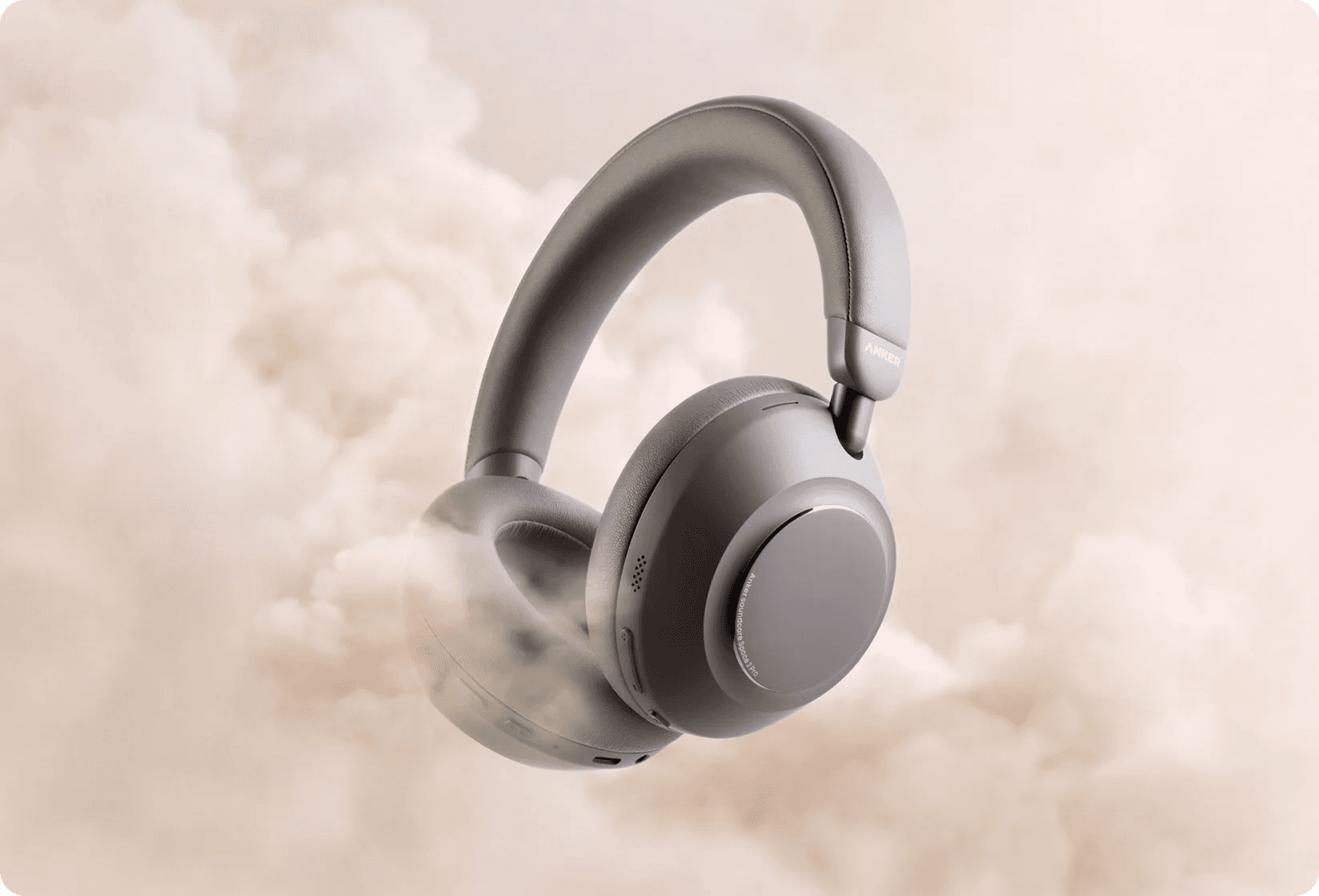
Soundcore Space 2 Pro review: Buy them for the calls?
Soundcore aims to make a $200 wireless headset that works as well at a shared desk as it does on the way home. The evidence suggests it chose the right problem to solve.
A sentence can be hard to hear even when the person speaking it can hear everything perfectly. That's the problem I would put at the center of a decision about Soundcore's Space 2 Pro. The headphones can turn down what you hear around you, and separately they can help the people on your call hear you over the same room. Put those two jobs under one label, noise cancellation, and it's easy to buy the wrong thing for the place you work.
Soundcore's D1406 over-ears launched at around $200, according to Engadget's hands-on review. The review found especially clear outgoing voice audio, average overall active noise cancellation, comfortable fit and about 30 hours of battery life with noise cancellation on. That combination points to a specific buyer. If work calls are the reason you're looking at headphones in the first place, the Space 2 Pro deserve a look. If you're comparing them against expensive models because you want the quietest possible flight, the evidence is weaker.
The assessment draws on Soundcore’s published materials and Engadget’s independent testing. Price refers to the reported launch price. Check the exact model and current price where you buy.
Start with the other end of the call
One of the simplest ways to choose headphones is to ask who is having the problem. In a call, there are two listeners. You're hearing a colleague through the ear cups and trying to make out the conversation over what's happening around you. Your colleague is hearing whatever your microphone and processing send them. The headphones can work very well for one listener while leaving the other with a fairly ordinary experience.
The Space 2 Pro appear to make their strongest case on the microphone side. Soundcore puts its Thus chip and microphone array at the center of its pitch. Engadget's reviewer found the outgoing voice especially clear in testing. That's a more convincing basis for choosing them than the chip name. For people who spend part of the day at a shared table or who have to stay on a call when a room becomes busy, the basic job is getting the words across clearly enough that the conversation doesn't stop every few minutes.
That strength shouldn't be taken as a guarantee about every call. Microphone processing has to make decisions about what to pass through, and a person speaking nearby is a different problem from a steady hum. Call apps, connection quality and room acoustics affect the result as well. If you always use the same laptop, call app and desk, the relevant comparison is your current setup. A colleague telling you that you sound clearer under those conditions is more meaningful than a broad claim on the packaging.
There's also a question of what you already own. If a wired headset with a boom mic is clear and comfortable at your desk, a wireless over-ear model has to earn its place through flexibility, music playback or the ability to use the same pair away from work. A dedicated microphone remains a sensible option for people who spend most of the day seated and need predictable sound. The Space 2 Pro are trying to serve more situations with one device. That's an advantage when you move among those situations often enough to care.
What the noise cancellation leaves behind
The other job is getting outside sound out of your own ears. Engadget found that the Space 2 Pro handled keyboard noise and human voices fairly well but was less effective against some steady sounds, including loud fans. That's a useful distinction because the marketing mentions office chatter, while many people shop for a model they can also take on a plane or wear next to a loud appliance.
Try translating that finding into a week. A pair that takes the edge off a shared workspace might make a meaningful difference on Tuesday afternoon. On Friday, the advantage could be smaller if the sound that gets to you is the drone of a ventilation system. The kind of noise matters as much as the fact that there is noise. A buyer who has a particular sound they need to escape should put more stock in testing against that sound than in a generic feature ranking.
Passive isolation is in the equation too. An over-ear cup needs a consistent fit. Glasses, hair and the shape of the contact around your ear can change how the fit feels or seals. A person who wears glasses all day should try the pair with those glasses. A person who moves between listening and conversation a dozen times a morning should also consider how often they will remove the headset. Convenience repeatedly wins over theoretical performance once something becomes a work tool.
Fit is also where one positive independent review has limits. The reviewer found the headphones comfortable and liked the build. That's a good sign when a product is sold as something to wear for extended periods. It can't tell you whether a headband will press on the same spot after two hours on your head. A return window is useful here because the first minute of wearing headphones is rarely the minute when you notice whether the pads get warm or whether the frame of your glasses makes the cups feel uneven.
Battery life that changes the workweek
Engadget reported about 30 hours with active noise cancellation on. That is several workdays of intermittent calls and listening for many people. If you're pairing them with a laptop at a desk most of the time, it also lets you be less deliberate about taking them off a charger before the first meeting. The underlying advantage is fewer interruptions, especially if you regularly work away from the desk where your charging cable lives.
Battery numbers are easiest to use when you connect them to a pattern. Ten hours of meetings over a week is a different load from playing music for an entire shift on five consecutive days. Volume, features and connected devices can change the result. Consider how long the pair needs to go between the times charging is easy, and look for a margin. Matching a published number to an exact schedule looks tidy on paper and leaves little room for a busy day.
The alternative is to buy for peak battery life and tolerate other weaknesses. That can make sense for someone who frequently travels and has limited charging options. For a hybrid worker, battery life above a workable threshold matters less than sound on the call or comfort during it. Paying more for a model with better noise cancellation may make sense if travel is such a large part of the week that the plane cabin is the room you're trying hardest to solve.
Sound features and the price tier
Engadget liked the headphones' out-of-the-box sound and was less persuaded by its tested customization features, including personalized tuning and spatial audio. That's one listener's assessment, and preferred tuning is personal. The practical implication is to judge the basic sound first. Features that require excursions into an app can offer some value if you enjoy experimenting, but they shouldn't have to rescue the headphones every time you turn them on.
It helps to separate the things you'll notice all day from those you'll use once. Controls you can find without looking matter when you want to adjust the volume while a call is starting. The transition from work audio to music matters when both are a big part of the same day. A tunable listening mode can be appealing, but for this purchase it's worth asking whether you would miss it after the first week. A spec sheet assigns all of these features similar visual weight. In use, they get very different amounts of attention.
At this price the Space 2 Pro sit between cheaper over-ears and the premium models many people try first. Check the price of Soundcore's own Space 2 when you compare. If your main reason for stepping up is outgoing voice quality, the premium makes sense only to the extent that the difference matters to you in actual calls. If you hardly make calls and prefer the way a cheaper pair sounds, the case for paying more gets thinner. The reverse applies if you work in shared spaces, need clear speech and regularly use the same headphones for music afterward.
Sale pricing changes the comparison. A premium pair with a temporary discount may be close enough in price to justify weighing its strengths. That comparison should still be against the job you need done. Paying a little more for that pair on the assumption that cost predicts microphone quality misses the most interesting thing about the Soundcore. The independent account gives these headphones a specific strength that can matter independently of their place in the market.
Who should put these on the list
Start here if outgoing voice clarity is the chief frustration with your current setup, and you want something that doubles as an everyday pair of over-ears. The strengths Engadget heard line up with that purpose. Treat its reports of ordinary overall noise cancellation as a reason to compare more carefully if your biggest problem is a loud, constant sound that you hear for hours.
If you're replacing an existing headset, try one call with the old pair and another with the candidate in the same room. Ask the person listening about speech, changes in volume and how distracting the room is on their end. Then spend the length of a normal meeting listening for yourself. That's the purchase the Space 2 Pro make easiest to justify. You need to hear the conversation clearly enough to stay in it, and someone across the line needs to hear you.