

In GTA VI, the music business is part of the scenery
Real Dimez and Only Raw Records give Vice City something more interesting than a playlist. They give it an industry.
A rap duo can have a local hit and still spend the next five years trying to make the next one. That's the predicament Rockstar gives Real Dimez, the fictional Vice City act in Grand Theft Auto VI. Bae-Luxe and Roxy go back to high school. Their early collaboration with a local rapper gets them noticed, but by the time they sign with Only Raw Records, the first success has become something to live up to. The label wants a hit as much as they do.
That's a specific story to tell in the middle of a launch campaign for an enormous game. A lesser character sketch would stop at the duo's sound or attitude. Rockstar gives them a career problem. The first record made them visible. What happens when attention moves faster than opportunity, and the people who can help you find the next opportunity are taking bets of their own?
GTA VI is out on PlayStation 5 and Xbox Series X|S. The game's lead characters, Lucia Caminos and Jason Duval, are the focus of the launch. But follow the money through one corner of the game's official character material and another kind of story emerges. There are performers, a young label operator, a local businessman with a club and a recording studio, and a whole set of incentives that existed before the player arrived.
How a label gets built
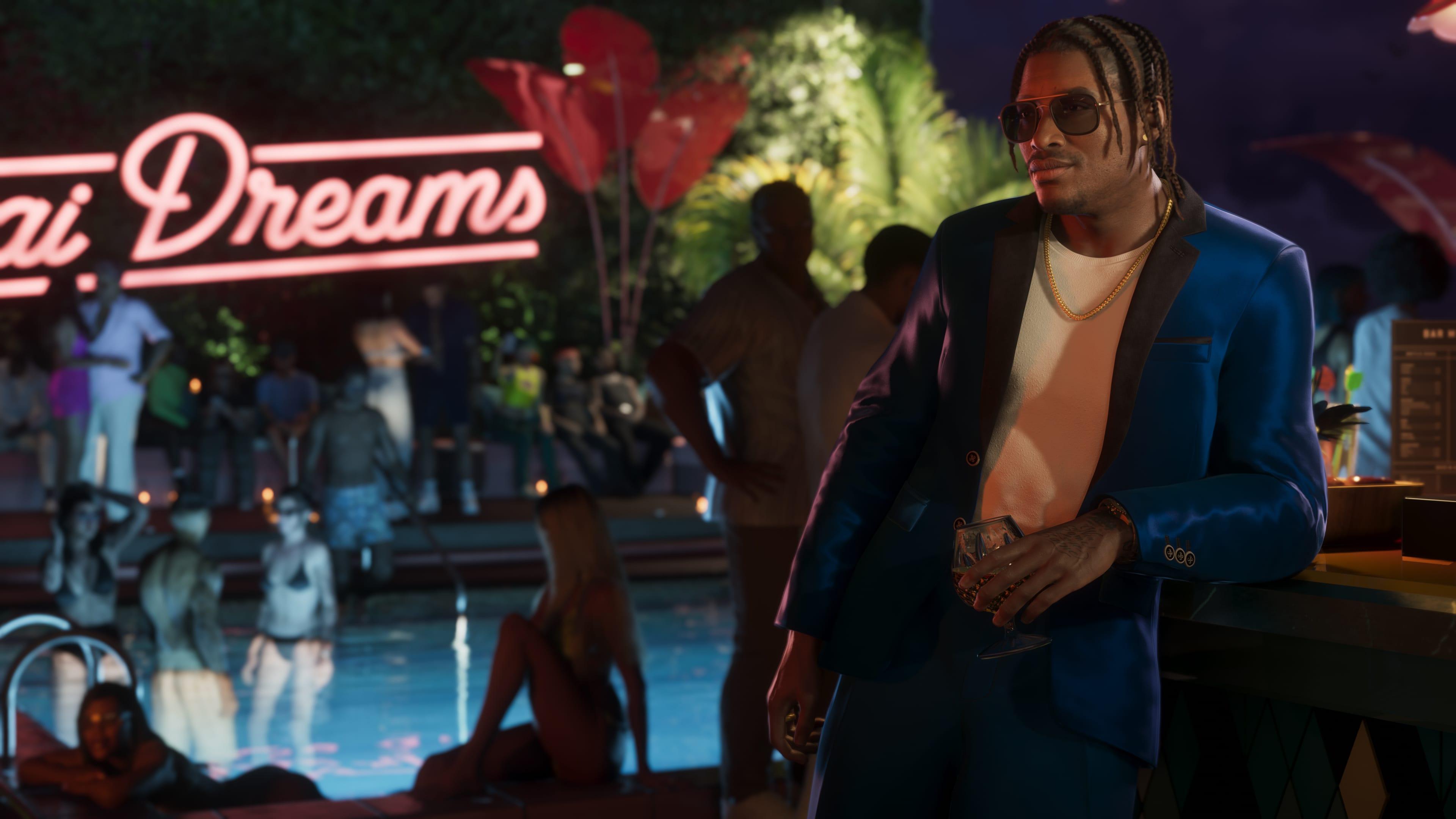
Dre’Quan Priest wants to make it in music. Boobie Ike has the infrastructure. Rockstar describes Boobie as a Vice City businessman whose interests include real estate, a strip club, and a recording studio. He and Dre’Quan are partners in Only Raw Records. Put those details together and the club becomes more than a place to stage a scene. A business with a room, an audience and cash coming through the door can give a young label a foothold.
The relationship works on paper because each partner has something the other can use. Dre’Quan needs somewhere to make the music and an organization that can take a chance on an act. Boobie can get a room built or pay to keep it open, but he still needs someone capable of recognizing a record people might want to hear. There's a potential conflict built in. A patient partner can let an act develop. A partner who needs a return can turn the next single into a test of everyone's judgment.
That's an interpretation of the character setup. Rockstar's biographies supply the connections, and those are interesting enough without assuming how the game plays them out. We know who is tied to which business. We know Real Dimez have an early success to follow. Those pieces give the city a music economy with a past and a future, even before anyone asks what happens in a mission.
The women in the frame
As Rockstar presents them, Bae-Luxe and Roxy are collaborators with history. That's a richer starting point than making a rap duo a shorthand for nightlife. A creative partnership formed in school survives a first round of attention, and now both women have to decide what it means to work inside somebody else's venture. A producer might hear a direction for the next song. The label might hear a chance to repeat what already worked. The artists who have lived with the material the longest might want to go somewhere else altogether.
The premise also draws attention to the unglamorous middle of a career. Origin stories are easy to market. So are coronations. The interval where an act has enough success to raise expectations and too little leverage to dictate terms is harder to dramatize. The label becomes part of the story precisely because it has a different stake in that interval. Even when everybody wants the record to land, they're entitled to different things when it does.
Rockstar's image material includes a shot of the duo performing on top of a car while people point phones at them. That frame says something about the distance between a performance and its distribution. A small crowd can be the whole audience for a moment and the means of getting the moment to thousands more people. A person filming is a witness, a possible fan and a potential distributor. From the performers' side, a camera can feel like evidence the show is going over well. From the label's side, it starts to look like something you can count.
The label is also a way to give a location more than one meaning. A club can be a place to go out for someone passing through, a workplace for the people on a shift, and an investment for its owner. Rockstar's character sketch puts that owner in business with an aspiring record man. Once the same door means a different thing to each of those people, the city has a reason for people to arrive at the same address with competing plans.
The city before the soundtrack
Grand Theft Auto's in-car radio is especially good at giving a place a voice. A station can establish a musical geography while the player is on the way to do something else. The songs set pace and atmosphere, and the people speaking between them give the impression of a city with competing ideas about itself. Vice City has long benefited from that device. A drive with the radio on can put a player inside a version of the city that feels curated by whoever is on air.
A character like Dre’Quan gives that experience a possible other end. Somebody has to book a room, record a song, decide how much to spend, convince an act to show up and get the result in front of people. Those decisions are often invisible once the record becomes the song that plays on a drive. Naming the people who make them gives Rockstar another way to create place. Suddenly a studio address matters as much as a station preset.
There's a useful distinction between the commercial soundtrack for the game and the fictional music business it portrays. Take-Two's launch announcement describes a separate official album from Atlantic Records. That real release is an occasion to hear the music as a product with its own credits and distribution. The biographies for the fictional label are a different source, and they tell us about the relationships inside Leonida. Together they show the attention Rockstar is giving music on either side of the screen, without requiring a one-to-one match between an album track and a fictional artist's career.
A local sound has a local audience
In a fictional setting, it's easy to give a city an instantly recognizable sound by licensing records that have already traveled well beyond their place of origin. Giving a small act a local audience does something else. It suggests there are people in Vice City who remember where they first heard the duo, who know a collaborator by a different name, or who have a favorite version of a song that never became the record. These are possibilities the material suggests. The value of making that history part of the introduction is that it gives the audience a reason to ask how popularity travels inside this particular city.
A local music story can also give different places a relationship to the same sound. A song at a party is part of somebody's night. At a studio, it is still something that can be changed. At the club, it can tell the owner who showed up and what made them stay. Treat those rooms as places where people listen for different things and the movement between them starts to tell a story on its own.
What the game can do with ambition
There is a temptation to make an open-world game sound more convincing by reciting its scale. Size is easy to count. How people depend on each other is harder to measure, and often it's what makes a place feel like it exists after you leave. A club owner with a studio has a plausible reason to care what happens on both sides of a neighborhood. A duo with a track people remember gives the label a reason to bet on them and a reason to second-guess them. A young music operator has a reason to keep answering the phone.
Those links also make room for a more interesting depiction of the people who work in music. Industry stories can turn businesspeople into scenery around the star. Here the artist, operator and investor each have a version of the same event. The artist can hear a career taking shape. The person paying the bills can hear a decision they have to make again next month. The audience can hear a song and go home before either conversation starts.
It's worth paying attention to the line between a colorful portrayal of a rap business and a caricature of it. The official profiles wrap Only Raw Records in Vice City's broader crime fiction. The detail that makes the premise worth following is the work itself. Someone needs to make the record. Someone needs to decide who's in the room. And a performer with a past has to figure out which parts of that past still belong in the next song. How deeply the story follows those questions is for play and further reporting to establish.
That gives Fever a reason to watch this part of the game beyond opening weekend. Spectacle can tell you a city is busy. It takes a smaller, knottier story to show what people are busy doing. Bae-Luxe and Roxy have already lived through the first chapter of theirs. Vice City starts to feel like their town when the thing they want most is another chance to make everybody else listen.