

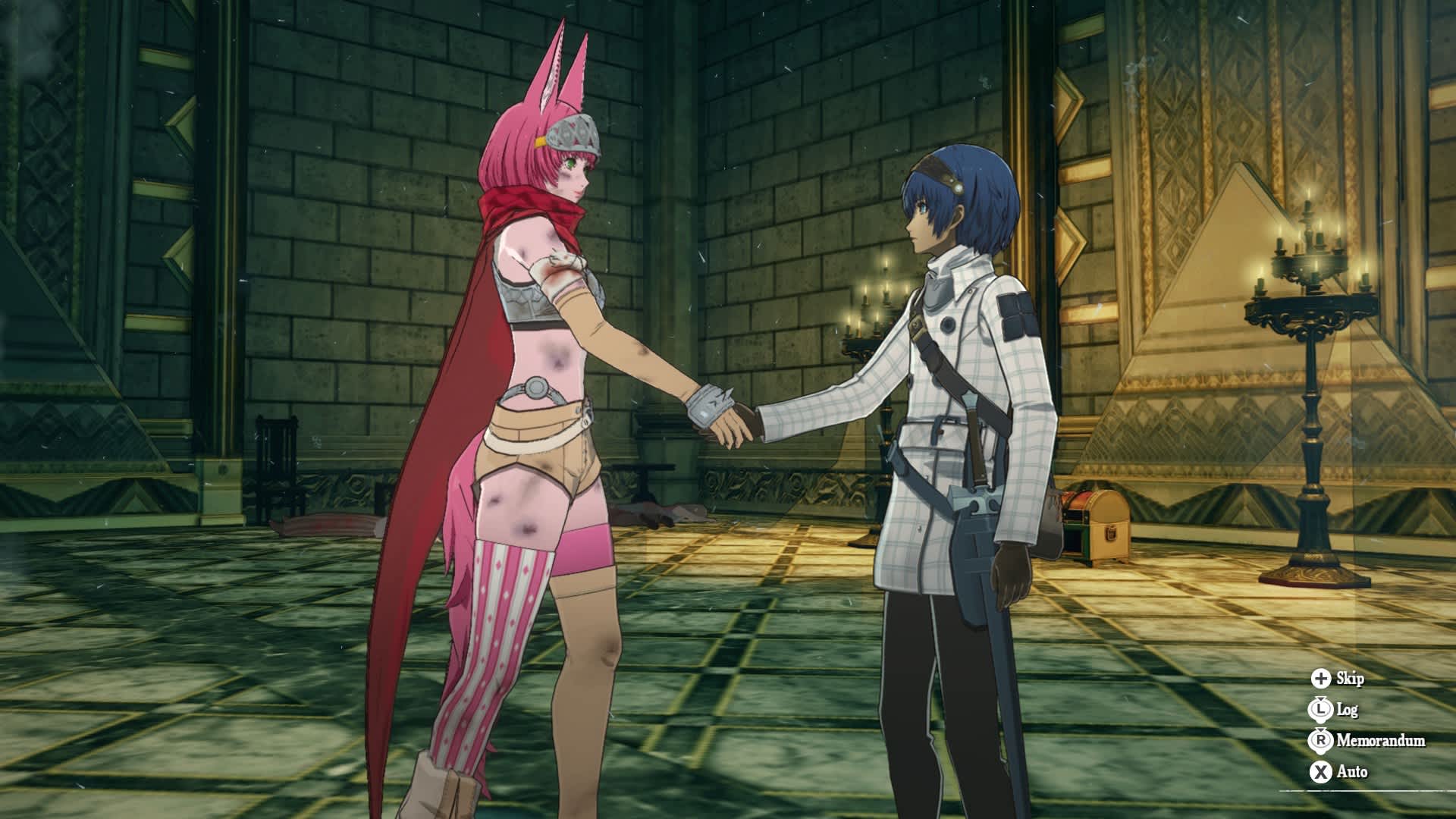
Metaphor: ReFantazio on Switch 2 Is Best Bought After the Demo
Atlus's portable edition suits the way its sprawling RPG divides up the calendar. Published tests show why the time spent between those appointments deserves a trial run.
A late afternoon in Metaphor: ReFantazio can go to a friend or to a dungeon. The calendar is short on spare appointments, and a conversation with a companion can unlock something useful the next time you fight. An errand can make a day well spent even when it produces no grand breakthrough. There is a sensible case for putting a game structured that way on the same screen you already use for a twenty-minute detour.
The Switch 2 version makes that case, provided you know what you are giving up. The recommendation, based on the publisher's materials and published Switch 2 play and technical reports, is to try the free Prologue Demo and buy the portable version if you like the feel of moving around its cities and expect to use handheld mode often. If a different platform you already own will be where you spend most of your time, there is little reason to buy a second copy solely to get this port. The story and combat are the attraction. Technical roughness is the cost of taking this version with you.
Atlus and SEGA released the Switch 2 edition on November 12. This is Studio Zero's fantasy role-playing game about a kingdom choosing its next ruler while a young traveler seeks to save a cursed prince. The new hardware release has its own separate buying question. People who skipped the 2024 original have a new way to play a substantial game. People who own it already need to decide whether a different screen and the chance to start over are worth paying for again.
A calendar with a reason to travel
A portable RPG earns its place in a bag when it can make a small amount of time feel like meaningful progress. Metaphor has that structure before anyone thinks about the hardware. A day can be an appointment with somebody whose life is becoming clearer, a little work on a social virtue, a new route or a trip devoted to a longer adventure. The rhythm gives short sessions a purpose. You can put away the device after a decision rather than only after the next giant spectacle.
The decisions matter because the game's job-like Archetypes tie these activities together. The class you want might come through a relationship. Work in battle can advance that class, and a skill learned on one path can help build another. Nintendo Life's Switch 2 review describes the flexibility of developing classes across the seven party members and carrying skills between Archetypes. The important consequence is that the time spent talking and the time spent fighting can belong to the same plan. If a class is missing something useful, a quiet afternoon can be part of fixing it.
There is a related economy in combat. The system rewards hitting a weakness or scoring a critical with more opportunities to act. A miss or an attack into the wrong defense can squander those opportunities. There is also the decision before the fight, when action on the map may change how the engagement begins. These are reasons to pay attention to a seemingly routine encounter. It can teach you something about the package of roles and skills you have brought, even when a larger boss is far away.
The party gives those choices some life. Nintendo Life highlights Heismay, whose grief and experience of prejudice do not leave him immune to prejudice of his own. The kingdom's attention to status and difference can carry through in a companion's story rather than only in declarations from the people running it. There is room to get absorbed in a chapter and want the longer session, too. Portability gives you more occasions to return to these stories. It cannot turn every thread into something you would be comfortable putting down at a station stop.
Where the conversion interrupts the rhythm
The strongest caveat comes from what happens between the things you want to do. In RPG Site's full-game comparison, Mikhail Madnani measured a tested area transition at 10 to 11 seconds on the Switch 2's internal storage. His reported result for the PS5 version on a standard PS5 was six seconds. In the same test, Switch 2 reached the title screen faster. Those are results from particular tests, rather than a promise about every area or every installation. They point to the difference between a game that gets you to its menu quickly and one that keeps your errands moving after you get there.
That distinction is more consequential in a place you cross repeatedly. An extra pause ahead of a major event feels different from several pauses on the way to a shop, a contact and the next area. Several seconds will not decide everybody's buying choice. Their significance depends on how often you expect to do work in batches and how much of that work you want to do handheld.
Both Switch 2 assessments report performance inconsistency. Nintendo Life calls out muddier imagery and dips alongside praise for the presentation and combat. RPG Site tested multiple visual modes and preferred the quality option even with its uneven frame rate. Its reviewer found that reducing visual quality didn't reliably produce the stable result he wanted. This is an important check on the expectation that picking a menu option will solve every problem. The retail version's trade-offs are better judged by the actual experience you have with it than by a label that suggests faster performance.
This is an unusually visual RPG even when you are just looking through a menu. The interface has a sense of occasion, the palette helps distinguish characters and settings, and Shoji Meguro's music gives encounters their own charge. Nintendo Life's review specifically notes the chanting by Keisuke Honryo in its discussion of the soundtrack. Fidelity can matter here without high-end graphics being the reason to play. An image can hold together from normal handheld distance and still look compromised on a large TV. The same goes for frame pacing. A person happily immersed in the writing may let a hitch go by. Somebody sensitive to inconsistent motion will be seeing it across a very long game.
When a demo is the right way to review a purchase
The Nintendo store listing gives you a practical way to settle most of this. Atlus offers the free Prologue Demo, and publisher materials say its save data can carry into the full title. That makes it worth treating the trial like the first session you want to have rather than a reel of an expensive game's best moments. Nintendo’s US listing specifies 49.6 GB for the full game, so a buyer moving several large games on and off the same device should also check available storage. Take the device off its dock if that is how you expect to play. Move through an early settlement, open the menus, go into the field and pay attention to how those pieces feel together.
It helps to make one deliberate comparison in the time you already have. If you expect to play on a TV, compare the initial handheld impression with a little time docked. If you prefer louder or busier environments, try a session with your headphones and ordinary brightness rather than assuming the showcase setting at home represents every commute. The early demo won't reproduce the load profile of every later sequence, and the full game's settings or patches can differ. Its value is in revealing whether the port's basic manners bother you before you commit to the long version.
For a first-time player with a Switch 2 and a crowded television schedule, the overriding advantage is access. The best technical version in a room you rarely have to yourself can turn into a game you never start. The portable version has a specific use case strong enough to justify it after a satisfactory demo. Someone who has already finished the story needs a stronger reason. A new role for the party or another trip through a favorite setting can be that reason. A mildly tempting second copy can just wait.
For someone buying mainly to play docked, the recommendation is to compare the version already available on the platform they use most, especially if stable performance is important to them. Published comparisons also show that different console configurations can behave differently. A person deciding between two platforms will learn more by checking the particular hardware and build than by treating a console family's name as a benchmark. For anyone waiting on further optimization, make the buying decision on the current version and treat future fixes as something to verify when they arrive.
There is a second way to make the demo informative. Try an encounter once with the party as it comes and once after making one deliberate change to its jobs or inherited skills. If that modest experiment is more interesting than grinding until a familiar plan works, the full game's growth system is likely to appeal to you. It also helps separate the port decision from the larger question of whether you like this particular game. Fast menus would make an already enjoyable routine easier to repeat. They would do very little for someone who never wanted to spend an evening making those decisions.
Metaphor's best argument for handheld play is still small. The first instant of freedom after a big event can leave you wondering which friend to see before the day is gone. You can make that choice in a quiet twenty minutes and come back to the consequences later. If the demo lets you enjoy that moment on Switch 2 and the pauses stay out of your way, the portable edition has done the important part of its job.