

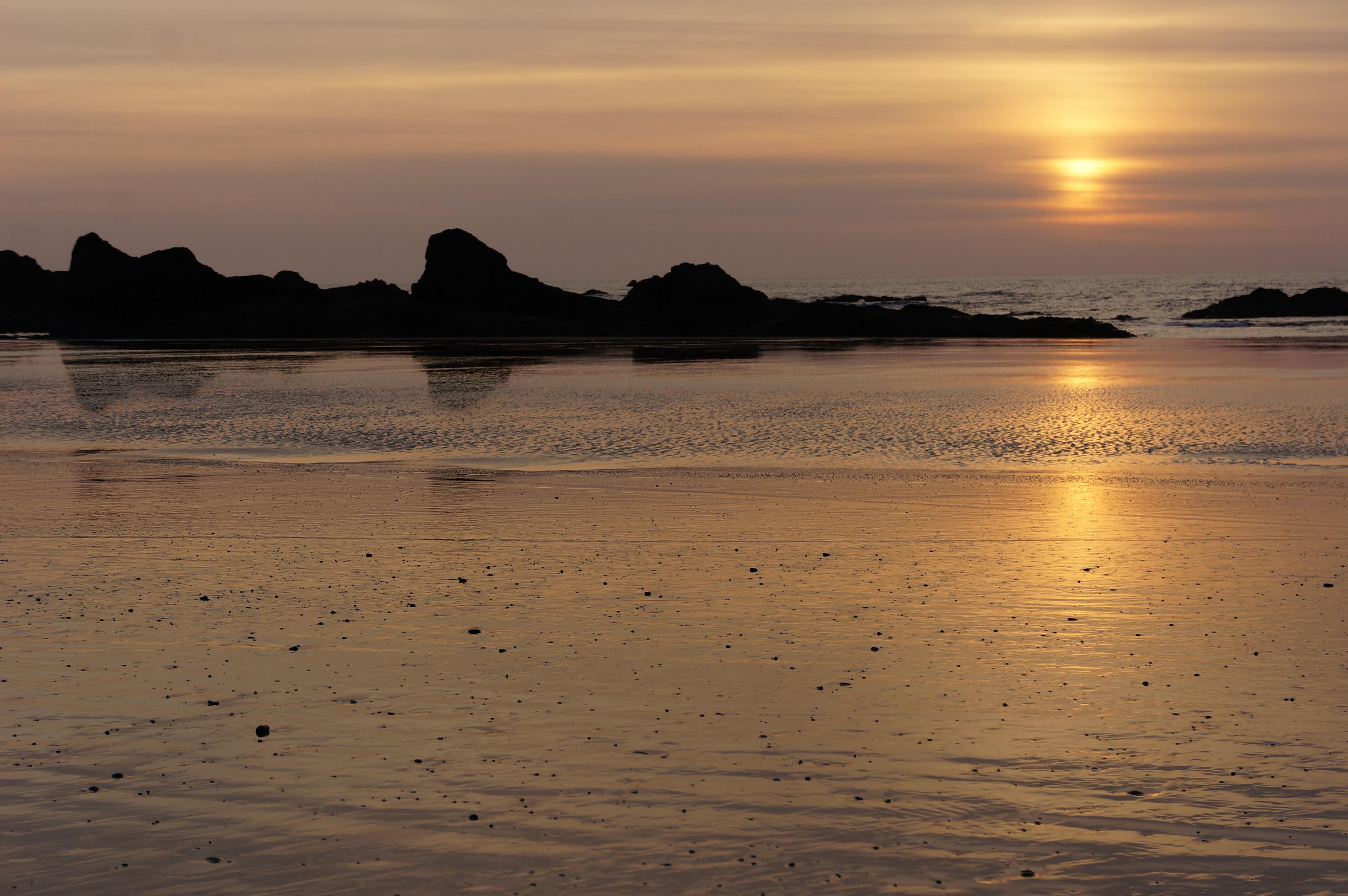
A winter weekend on Washington’s Olympic coast
Two days around Kalaloch and Ruby Beach, with time for the tide, the drive and a change of plans.
The best time to see the Olympic coast on a winter weekend may be eleven in the morning. Or nine. Or during the hour you thought you would spend eating lunch. A map puts Kalaloch and Ruby Beach close together along U.S. 101. A tide table and a marine forecast tell you how much of that coastline is available to explore when you get there.
That's what makes this a good two-day trip. There is no need to drive the entire peninsula, finish a long beach hike, or count how many parks you managed to see. Find a base on the southwestern Olympic coast and choose one stretch of shore for each day. Hold one part of the schedule open for weather. A storm can make the water more dramatic and remove the part of the beach you'd planned to walk. Give yourself somewhere to go when both things are true.
The National Park Service describes Kalaloch and Ruby Beach as directly accessible from Highway 101. The offshore rocks are protected habitat. The coast gives visitors different views from each stop, from the more open shore around Kalaloch to the sea stacks off Ruby Beach. The stops are geographically close enough that changing which one you visit first shouldn't require rebuilding the whole trip. That's useful in a season when the daylight is short and the best available window may move.
Before you leave
Start with where you're coming from. The park surrounds a large part of the peninsula, and the route to one entrance can give you a poor idea of the time it takes to reach another. Set the navigation destination to your lodging or the actual beach lot. From the Seattle area, compare the routes your navigation offers for your departure time, including any ferry segment, and allow for waiting or slower winter roads. A route from the south may send you up the coast by a different approach. Make that decision with the road and weather information for the weekend you're taking.
Reserve a warm place to spend the night if you want to make the most of a short trip. NPS lists rooms and cabins at Kalaloch Lodge and describes the Kalaloch campground as open year-round, subject to current conditions and availability. South Beach campground is seasonal. A base around Kalaloch gives you a short retreat if the first outing is wet enough to soak your outer layer. If you stay farther away, allow room in the day for the return drive and confirm where you can get food. Finding a particular place to eat after dark has less appeal when everybody is cold and the other options are miles apart.
Use three separate checks before leaving. Look at the park's alerts and conditions page for park roads and facilities. Check the highway route with the state transportation department. Then look at the tide predictions and coastal forecast. One source won't substitute for the others. An open road can end at a hazardous beach. A useful tidal window can arrive while high surf makes approaching the water a bad idea. If a closure or forecast removes your reason for making the drive, this is an easy trip to move to another weekend.
Pack with a shorter trip in mind, even if the beach is your only walk. Bring a waterproof outer layer, warm clothes, footwear with grip, a dry change, water, something to eat, a light and offline maps. The NPS recommends carrying a tide table and topographic map on coastal hikes. A phone is useful when it is working and connected. Save the information you need before you leave a place with dependable service. When you change the plan, let anyone expecting you know where you're going and when you expect to be back.
Day one: get oriented at Kalaloch
Give the first day the simpler outing. If the weather and tide are suitable when you arrive, make Kalaloch your introduction to the coast. Start near an established access point, take a moment to see where the water is moving, and choose an easy turnaround while you can still see how to get back. You have plenty to look at without going far. The beach changes with the scale of the surf, the sky and how much room the tide leaves between the water and the driftwood.
The park describes Kalaloch as a good bird-watching area. The offshore islands and waters are protected habitat, and a small pair of binoculars can make them part of the trip even when there is no reason to walk farther down the shore. The point is to let the place tell you how long to stay. Ten clear minutes with enough light to see the coastline can be the most memorable part of the day. A long walk is an option for agreeable conditions and an appropriate route.
Beach 4 is a separate possibility in suitable conditions, and NPS points it out for tidepooling at low tide. Put it on the list as a conditional stop. Consult the park's tide information and watch the surf before approaching exposed rocks. Keep a clear route back and leave creatures where you find them. Give the tidepools a pass if the waves are reaching them or the timing would have you hurrying on wet rock. Seeing the beach from the access point still gives you a sense of why the area is worth coming back to.
Plan dinner and a change of clothes before you need them. Drying out makes a longer difference to a two-day trip than squeezing in another stop. If the clouds begin to open and you can watch from a safe established spot, the late light around Kalaloch can repay that shorter day. Then check the next morning's conditions again. What looked promising when you left home may have narrowed or moved.
Day two: make Ruby Beach the main event
Ruby Beach earns a morning of its own. The sea stacks give the shore a strong composition even on a gray day, and the view changes as the clouds and the ocean move behind them. Choose the time by daylight and safe conditions. An early low tide with strong wind and a large swell can be a worse opportunity than a later viewing window from an established overlook. Use the tide table to decide when an outing might work and conditions on the ground to decide whether it does.
Stay attentive to the way back, particularly if you move down the shore. Park tide guidance explains that some coastal points and headlands are impassable at higher water. Storms and strong winds can make water reach farther than a simple reading of a prediction suggests. Avoid relying on a squeeze around a point or turning the visit into an extended coastal route without a separate plan. Rising water can change a return leg while you're looking out to sea. Keep away from surf and logs it can move, and leave early if you have doubts about the route.
Bring a camera if you enjoy using one, but leave room for the first few minutes without it. Watch for how the weather rearranges the view. The sea stacks may appear and disappear behind bands of rain. Where it's safe to stand, a longer view from farther back can tell the story of the morning more convincingly than a close approach to the water. Clouds make the trip look like winter. They don't have to be treated as something that got in the way.
If you are traveling with someone who has limited mobility, check the individual access point before committing to it. A parking lot, a view and a practicable path to the sand are three different things.
A second plan for rough weather
Decide in advance what would send you inland or back to your lodging. A high-surf warning, a washed-out route or wind that makes it hard to stand comfortably are reasons to change the day. Consider a short inland stop in the Quinault area if its routes and facilities are open and the forecast supports driving there. The park lists Quinault south of Kalaloch and the Hoh Rain Forest to the north. Either is a different drive with its own road and trail conditions. A closed coastal plan is not a reason to chase a second closure.
An inland detour is optional. A good version of the weekend may be one beach, a slow meal, coffee the next morning and a clear drive home. Give fuel and daylight priority over a last-minute stop. If you do want an additional walk, choose an established short route, confirm it's open and leave time for winter road speeds. The ability to abandon an outing is part of the itinerary.
The coast is also worth visiting for the moment when you decide to leave. On a comfortable afternoon that might mean heading back with light still on the water. On a rough one it can mean watching for a while from a safe place and turning in earlier than you expected. Two days built around Kalaloch and Ruby Beach give you time to make those decisions without trying to get everything from a single visit. Pick a weekend with a promising window, then leave space in it for the coast to decide the rest.