Blade Runner 2099 Took the Right Lesson From Villeneuve: Permission
Silka Luisa says the sequel's example was never how to copy 2049. It was how to leave it behind.
Ask Silka Luisa about "Blade Runner 2049" and the answer is not about the fog or the orange ruins. It is about nerve. "What was so fantastic about what Denis did with '2049' was, he didn't just rehash what Ridley had done," the "Blade Runner 2099" showrunner told SlashFilm's Jeremy Mathai during a press junket. "He really created his own take on 'Blade Runner' that is very much his aesthetic. But it still felt like an evolution of Ridley's conversation."
That sentence is the operating instruction for the Prime Video series, which now has all eight episodes streaming. "2099" arrives after a Replicant uprising has flipped the social order, with humans at the bottom and two leads living opposite sides of the same lie: Olwen, a Replicant Blade Runner played by Michelle Yeoh, and Cora, a human posing as a Replicant, played by Hunter Schafer. Luisa said the distance in the title gave her room, enough space to "really carve out your own identity."
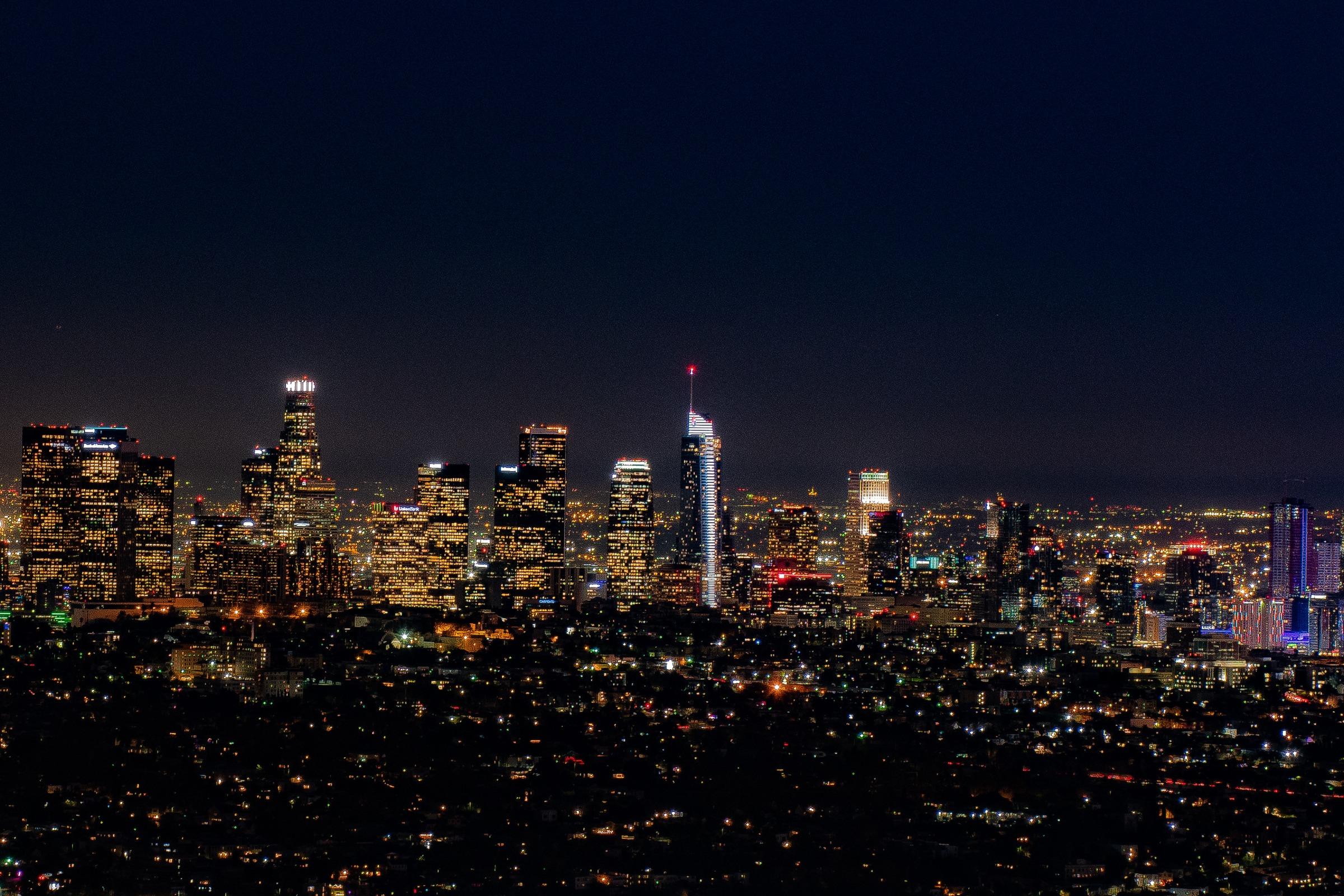
The borrowings that matter are therefore tonal and structural, not decorative. Villeneuve's 2049 kept Ridley Scott's rain, neon and noir ache, then moved the world 30 years into ecological collapse: Los Angeles under a fog thick enough to blur the skyline, Las Vegas reduced to an orange-hued ruin where a holographic Elvis plays to an empty room. Production designer Dennis Gassner told Wired the aim was "a harsher world than in the first film, both environmentally and stylistically," and described vehicles with "a more chiseled, angular, graphic strength." Roger Deakins, who won the cinematography Oscar for the film, put the ambition bluntly: "We were desperate to create our own world."
Notice what that list is. It is a method, not a mood board. 2049 did not reproduce Jordan Cronenweth's 1982 photography; it answered it with different weather, different monuments, different loneliness. The sequel also trusted silence. When K walks into the Vegas ruin, Hans Zimmer and Benjamin Wallfisch's score falls away, and the scene is allowed to be a man alone in a dead city.
"2099" inherits that permission and spends it on a different question. Where 2049 asked whether a Replicant could be the hero of his own life, the series starts from a world where the answer has already rearranged the furniture: the manufactured have power, and the humans are improvising. Luisa's point is that this is what fidelity looks like now. "That freed us up in a lot of different ways," she said, "because it meant we weren't just beholden to repeating the same thing over and over again."
The films still set the template for a simpler reason than reverence. They proved that a legacy sequel can be an argument with its predecessor rather than a cover version, and that audiences will follow a franchise that changes its own terms. A template is not a color palette. It is a standard for how much nerve the next one is allowed. What "2099" does with its own frames is a separate argument, and one the series is now making in public.