

Riot Games Has Been Running a Record Label Disguised as a Game Company
K/DA and True Damage closed Worlds at Barclays. The music is not marketing — it's the product.
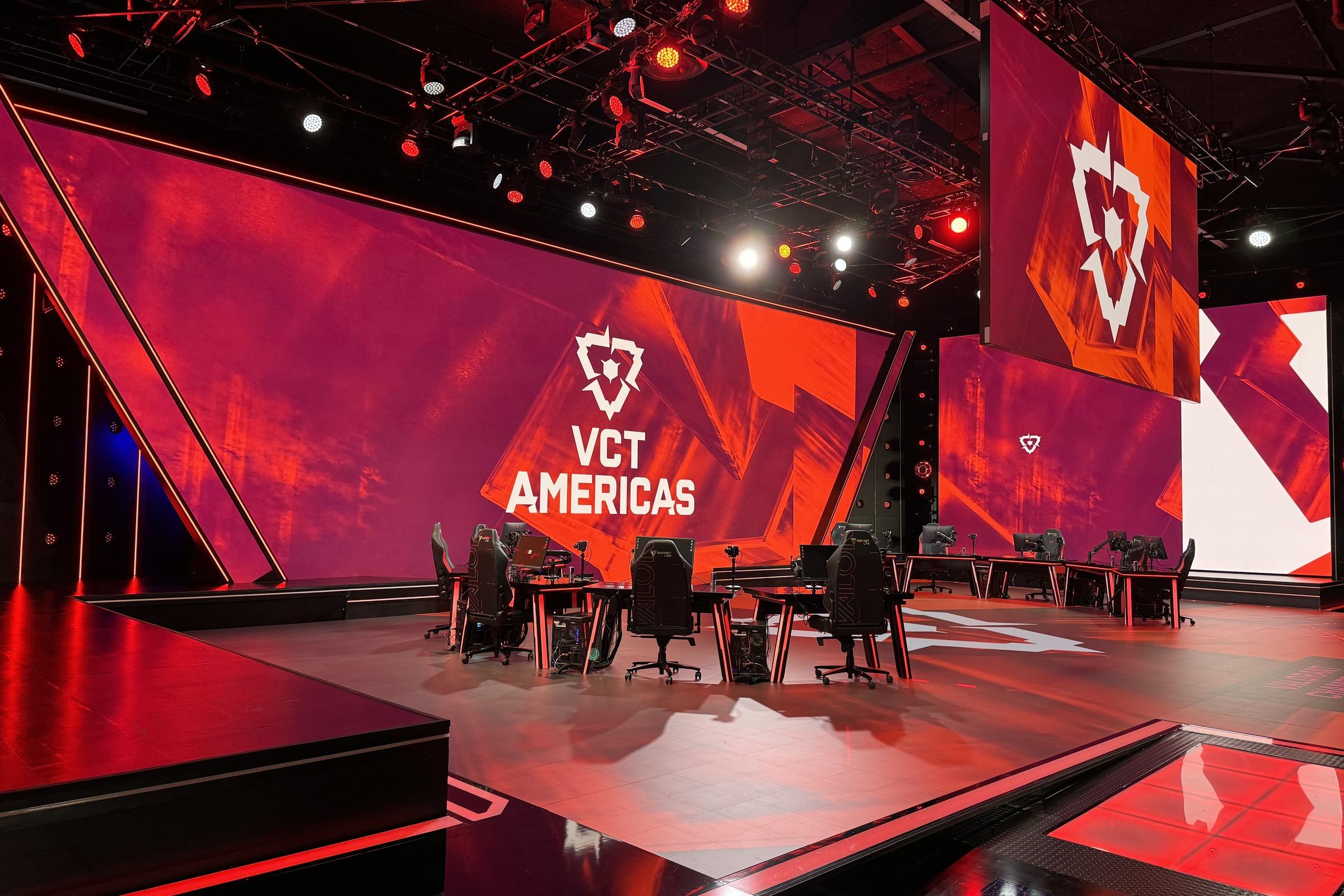
The lights went down at Barclays Center on Nov. 14, and 14,500 wristbands lit up in synchronized colors. Green lasers cut across the floor. Then a voice came through the PA: Akali, the rapper from K/DA, opening the League of Legends World Championship with a verse.
What followed was not a concert interlude between esports matches. It was a full pop production: K/DA — voiced and performed by (G)I-DLE’s Miyeon and Soyeon, Sophie Powers and Mimi Webb — ran through a medley of hits before debuting “Firestarter.” True Damage, the hip-hop collective, closed the ceremony with “Know My Name,” this year’s Worlds anthem, performed by Soyeon, Coco Jones, Sofia Reyes and Vic Mensa. Heartsteel, the boy band, added Anderson .Paak, Connor Price and Nic D to a lineup that previously featured Baekhyun, Tobi Lou, Cal Scruby and ØZI.
If that sounds like a label roster, it is. Riot Games has spent more than a decade building a music operation that happens to sit inside a video game company. The Worlds anthem is now a yearly pop event: Imagine Dragons’ “Warriors” in 2014, Lil Nas X in 2022, NewJeans in 2023, Linkin Park in 2024. The in-game acts — Pentakill, DJ Sona, K/DA, True Damage, Heartsteel — are not side projects. They are franchises with their own lore, their own fan bases and, in K/DA’s case, a platinum-certified hit.
The architect of the current era is Maria Egan, Riot’s global head of music and events since 2022. “I love the job of marrying storytelling and music, and how to do that within the world of League is so diverse, it allows you to play in so many different spaces,” she told Rolling Stone. The company’s advantage is that it owns the intellectual property, the audience and the distribution. It does not need to license a character or negotiate with a label to put a song in a game. It can build the artist from the ground up.
That is the part most brand-music partnerships get wrong. A brand usually rents a song or a celebrity and hopes the association rubs off. Riot builds the artist inside the fiction, then casts a real performer to embody them. K/DA’s Akali is a character; Soyeon is the rapper who gives her a voice. True Damage’s Senna is a character; Coco Jones is the singer who makes her sound like a star. The performer gets a new audience; the game gets a new song; the fan gets a piece of lore that exists in both worlds.
The “mantle” approach is the smartest part. When a member leaves or a group goes on hiatus, the character does not disappear. A new artist steps into the role. Heartsteel rotated in Anderson .Paak. K/DA brought in Sophie Powers and Mimi Webb alongside the original K-pop members. True Damage swapped in a new lineup. The virtual artist is permanent; the human talent is variable. That is a business model a record label would kill for.
Riot’s scale makes it work. League of Legends has more than 100 million monthly active players. The Worlds final is one of the most-watched esports events in the world. The music videos have a built-in distribution network that most artists would pay for. And the audience is global in a way that traditional pop is not: K/DA is a K-pop group, True Damage is hip-hop, Heartsteel is a boy band, and all of them are canon.
The Netflix collection is the next step. Riot brought a selection of its music videos to Netflix on Nov. 12, its first music-video partnership with a streaming service. That is a small move with a big implication: the music is no longer just a promotional layer for the game. It is a catalog that can be licensed, packaged and watched on its own.
For Fever’s audience, the appeal is the crossover. Coco Jones and Vic Mensa are credible artists, not mascots. The production is genuinely good. The videos are better than most game tie-ins. And the whole thing is a useful case study in how fandom works now: the game is the platform, the music is the content, and the characters are the stars.
Riot is not the first company to try this. It is the first to make it feel like a real label instead of a marketing stunt. The Worlds stage is the proof. A packed arena, a live band, a rapper performing a character’s verse, a global broadcast. That is not a game company promoting a game. That is a music company with a very large player base.