

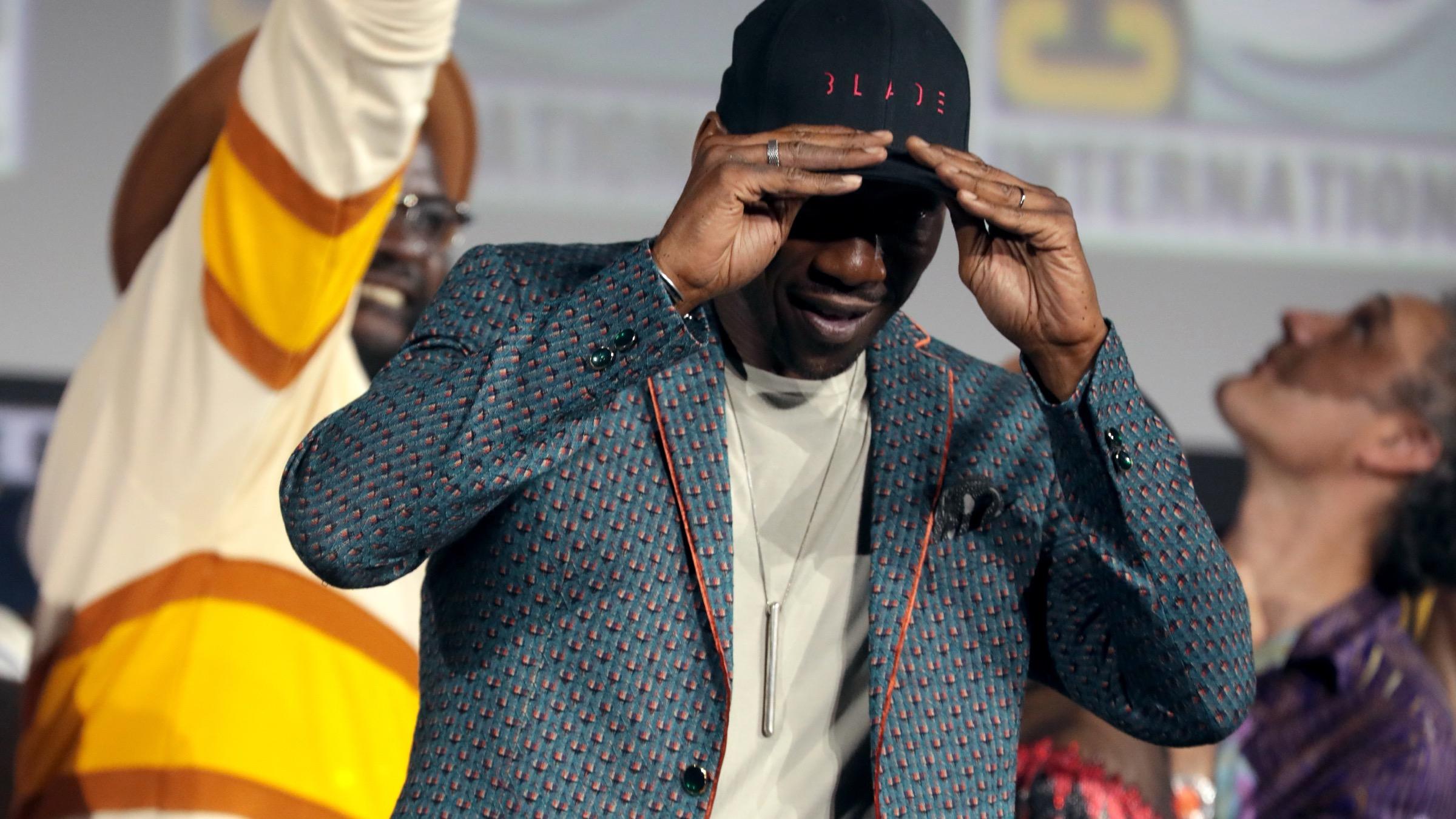
Two Oscars Later, Mahershala Ali Says Hollywood Still Has Few Roles for Him
The two-time Academy Award winner says awards do not create greenlights. “You’re like everybody else waiting.”
Mahershala Ali has two Academy Awards. He also has a clear description of what those awards have not done for him.
“There’s a lot of great stuff that gets greenlit, there are not roles for me in those,” Ali said on the 7PM in Brooklyn podcast with Carmelo Anthony and Kazeem “Kaz” Famuyide. “It doesn’t matter if I got 17 Oscars. If someone is not writing something for you or greenlighting something with you in mind, you’re like everybody else waiting and looking and searching.”
The setting matters. 7PM in Brooklyn, hosted by Carmelo Anthony and Kazeem “Kaz” Famuyide, has become a place where athletes and entertainers talk about the business behind the work. Ali used it to describe a gatekeeping problem, not a personal dry spell.
The quote is blunt, but it is not a complaint about his career. Ali won supporting-actor Oscars for Moonlight and Green Book and has worked steadily in film and television. The point is about where decisions get made. An award can raise an actor’s profile. It does not write a role, finance a film or convince a studio to build a project around him.
Ali’s career is proof of both sides of that. Moonlight and Green Book made him a two-time Oscar winner; True Detective and a steady run of film roles kept him visible. None of that guarantees the next script. The award is a credential; the greenlight is a decision made by someone else.
The comment arrives at the start of awards season, when Hollywood tends to talk about representation as a achievement rather than a hiring problem. Ali’s point is less flattering: the award is not the job.
That distinction matters in a year when studios have been cutting diversity, equity and inclusion programs. Ali said those rollbacks “on some level” affect what gets greenlit. He did not claim to know the exact size of the impact. He said the pipeline changes when companies are allowed to stop feeling pressure to broaden their slates.
The interview lands in a familiar gap between representation on screen and power behind it. Black actors have won major awards and anchored franchises. They still compete for a finite number of roles that are written with them in mind. The result is a strange kind of visibility: famous enough to be recognized everywhere, but not powerful enough to commission the next project.
Ali’s phrasing puts the responsibility on the people who greenlight, not on the actor who waits. “You’re like everybody else waiting and looking and searching.” That is the part of the quote worth keeping. It describes a system that rewards individual achievement while leaving the structure that decides what gets made largely intact.
For viewers, the practical question is what comes next. Ali is not asking for sympathy. He is describing the market. The roles he wants have to be written, financed and championed by someone with the authority to say yes. Two Oscars can open a door. They cannot build the room behind it.