

Before you leave for Thanksgiving, give the trip a flu backup plan
A few decisions made while everyone feels well can make it easier to change course if somebody wakes up sick.
A holiday trip usually has one itinerary and several people quietly relying on it. Someone is driving after work. Someone else promised to bring the pie. A guest who has been looking forward to seeing the kids is trying to make a tight connection. That arrangement can seem settled right up until somebody wakes up with chills. The first useful thing to have at that point is a way to take one person out of the plan without making the whole visit collapse.
The Centers for Disease Control and Prevention has published interim influenza vaccination guidance for the 2026–27 season. Its travel advice favors getting a flu vaccine at least two weeks before departure, since the body's response takes time. Most people six months and older are advised to get an annual flu vaccine, with some exceptions. The CDC also advises continuing vaccination while flu viruses are circulating. Thanksgiving week is a good reminder to locate the nearest place to get advice and a poor reason to assume a shot taken today will have had its full effect for a flight tomorrow.
Think of the travel decision as three questions. What can you do before you leave? What will you do if symptoms appear? How will you handle the days when someone feels better and may still spread a virus? Each deserves a small decision before a family chat is arguing over them all at once.
Start with the people at the other end
Take stock of who is traveling and who will be at the table. A grandparent over 65, a person with a weakened immune system or a young child can change the consequences of an exposure. Pregnancy and some chronic conditions can also increase the risk of flu complications. The host probably does not need anybody's medical history in a group thread. A private question about whether a relative would prefer extra precautions can give them a voice without asking them to explain why.
A useful invitation can make the alternative explicit. If you feel sick, tell us as soon as you can. We will keep the food covered and make a plan for you to see everyone later. That is mundane enough to work. If the only thing anyone hears is how long it took to coordinate the holiday, a sick person may feel obliged to minimize how they feel. Making the options visible before the trip changes who has to raise their hand.
Then look at the practical dependencies. Who has the spare house key? Can the groceries ride with someone else? Does a relative need the original driver to get to the house? If so, choose a backup driver. Do this for one or two genuine dependencies, rather than building a second version of the entire holiday. A list of replacement transport options matters considerably more than an emergency dessert recipe.
Put the backup where you can use it
Before you set out, check the change terms for your ticket and lodging. A fare described as flexible may have a difference in price or a deadline. A lodging reservation can have its own rules. Keep the confirmation and customer-service details together so you can use them before a deadline passes. If the trip is by car, the equivalent may be choosing a time at which you can realistically turn around or deciding where you could stop overnight if needed.
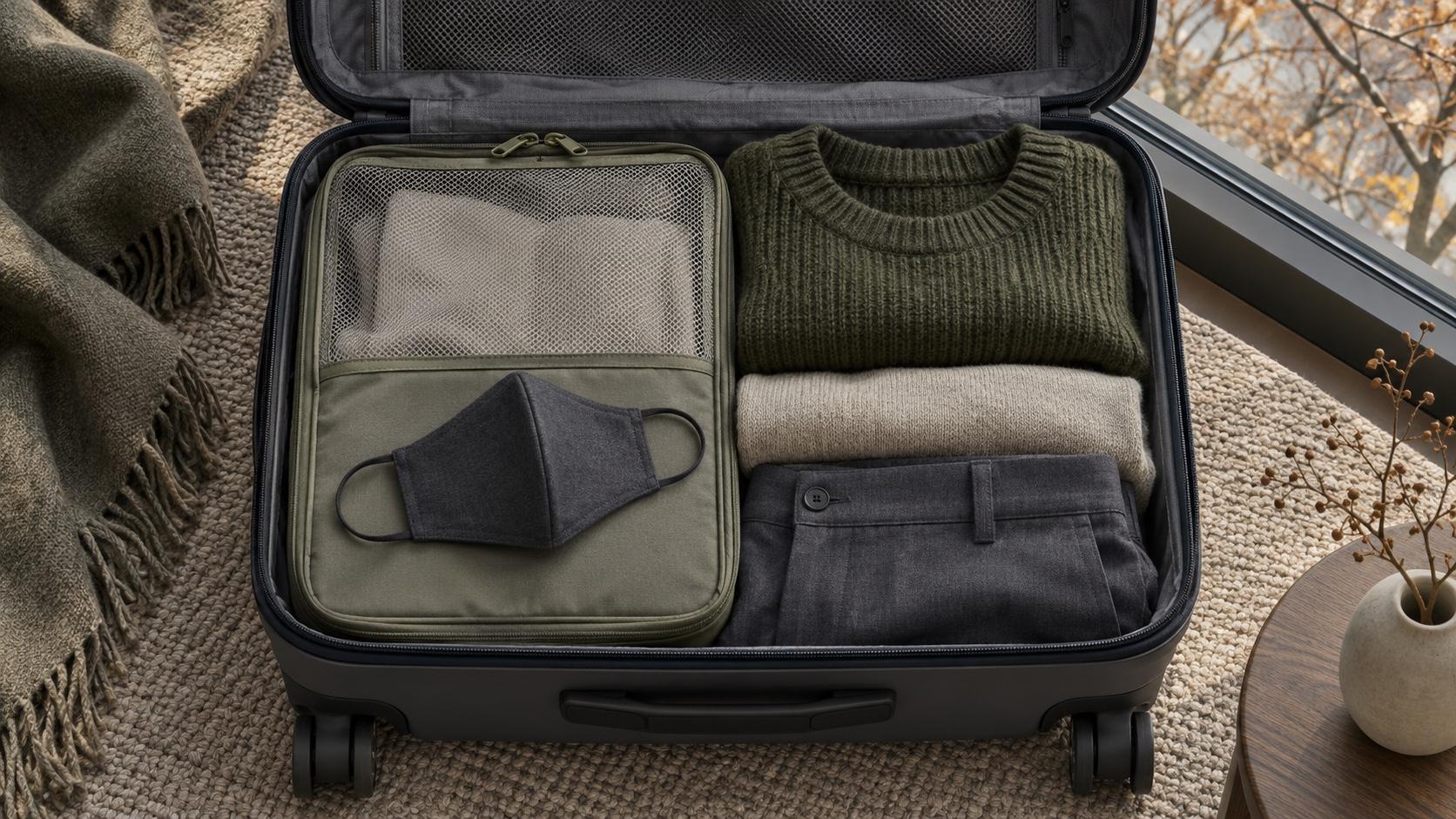
Put a well-fitting mask somewhere you can reach without unpacking a suitcase. The CDC includes masks among the additional measures people can use to reduce respiratory virus spread. The fit matters because air can move around gaps. A bag that is already under a pile of carry-ons is a surprisingly good way to make something that you packed unavailable when it would be useful. Think about the same accessible place for any medicine you need on your ordinary schedule.
If leaving is still several days away, a pharmacy or clinician can help you decide about vaccination options and timing. The CDC's current flu vaccine guidance includes a preference for certain vaccines for adults 65 and older when available. A person with a history of a serious vaccine reaction, or questions about a particular type of vaccine, should ask a clinician or pharmacist. It is a better use of a call than trying to match a complex medical history to a pharmacy appointment page.
Give symptoms room to change the plan
The CDC's general public guidance is to stay home and away from others if you have respiratory symptoms that another cause does not explain. Symptoms can include fever, chills, cough, fatigue, headache or a runny nose. A lack of fever on its own does not tell you whether to go. A flu, COVID-19 or another respiratory infection can also be hard to distinguish just from how you feel.
If you are at higher risk of severe illness, contact a healthcare provider promptly when symptoms start. Some treatments work best when started early, and the appropriate decision depends on factors such as the suspected infection and the person's health. Ask whom to call before you travel if you already know arranging care away from home will be complicated. Trouble breathing or chest pain are reasons to seek emergency medical care rather than to spend time solving your booking.
Here is what a small backup might look like. A traveler meant to leave Wednesday evening and spend two nights in a crowded home. On Wednesday morning they wake up exhausted with a new cough and chills. They check the departure deadline, contact the host and defer the trip. The backup driver collects the relative they were going to pick up. Somebody picks up the pie locally. The sick traveler can reassess as they recover rather than having to decide immediately whether they are canceling every future part of the visit.
Use the return window with care
The CDC says people can generally return to normal activities once two conditions have been true for at least 24 hours. Symptoms have been improving overall and there has been no fever without taking fever-reducing medicine. If you never had a fever, the improvement condition still matters. The CDC’s flu-specific advice also says people with suspected or confirmed flu who never develop a fever should stay home from work for at least five days after symptoms start. Additional precautions for the following five days can include cleaner air, a well-fitting mask, physical distance, testing when you will be with others and good hygiene.
The practical choices can vary by place. On a mild afternoon, meeting outside can be easier than agreeing on a complicated indoor arrangement. A host can choose a better-ventilated space, make room for fewer people or set a shorter visit. A traveler who has just returned to normal activities may prefer to postpone time close to someone who is especially vulnerable. A private conversation can make that feel like looking out for someone instead of making them decide on the spot whether to accept an exposure.
If symptoms worsen again or fever returns, the CDC advises staying home again and using the same improvement criteria before returning to activities. Treat the five-day period as a set of practical measures, with room to be especially careful around someone at higher risk. The guidance behind those measures is general public guidance. Healthcare facilities and some employers or schools may have separate rules.
Make the easier choice easy for the host
A host cannot keep track of everyone's departure time, symptoms and change fees. A single point of contact is plenty. Let them know early if your arrival may change, whether they should expect the rest of your group and when you will check in again. If a sick person is already staying in the home, the useful options might be a separate room when possible, cleaner shared air, space during meals and a simple way to get food and other supplies to them.
Testing can add information when deciding whether to be around other people, particularly people who are vulnerable. Follow the directions for the particular test and keep symptoms and timing in the decision. A negative test for one virus cannot rule out every respiratory infection. It is reasonable for a family to decline or shorten a visit based on new symptoms even if the cause is uncertain.
A crowded trip can also include hours in transit before anyone gets to dinner. Wash or sanitize your hands at useful points, such as before eating, and choose additional precautions that fit your situation. A different departure time, a less congested waiting area or a mask you can readily reach are ordinary changes. The goal is to turn a general intention into a choice you can make when other things are demanding your attention.
Put one conversation on the calendar
Pick a check-in time one day before the trip. Use it to confirm how everyone is getting there, whether anyone has new symptoms and what happens if plans change. Save the travel confirmation, tell the backup driver and make sure the person at higher risk knows they can speak privately. If you have several weeks before a later winter trip, make vaccination and medical questions part of the earlier planning.
The visit may go ahead exactly as you pictured it. That is what the group hopes for. A rescheduled meal, a short call or dinner dropped at the door can keep a connection alive if the plan changes. The better holiday backup is the one everyone can remember without opening a second spreadsheet.