

Skip Thursday. See White Sands from the edge of the dunes on Friday.
The New Mexico park closes for Thanksgiving and reopens Friday morning. Start with a one-mile walk, then decide how far you want to drive.
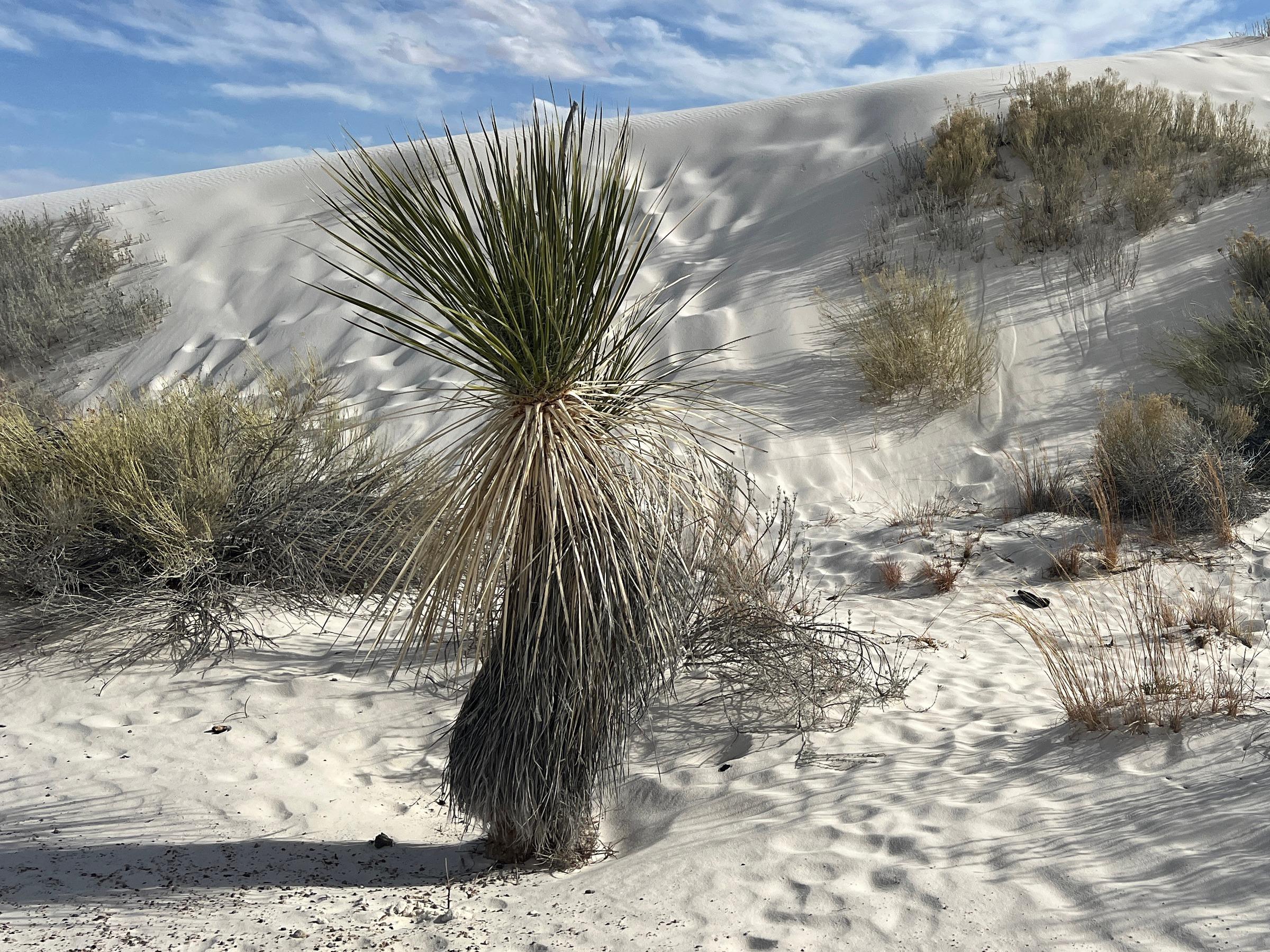
The first good stop at White Sands National Park isn’t at the end of the road. A few miles in, the Dune Life Nature Trail starts where the scrub meets the gypsum. For a while you’re still on flat ground, with enough vegetation to tell one stretch of trail from the next. Then the sand rises and a one-mile loop starts to feel like a walk you actually went somewhere on. Start there. The drive deeper into the dunes can wait until you’ve seen what lives at the edge.
One calendar detail changes the trip this week: White Sands is closed to both vehicles and people on foot on Thursday, November 26. The National Park Service’s park information and alerts put the reopening at 7 a.m. Mountain time on Friday, November 27. Dunes Drive is open as of the November 23 check, but a stretch of the road is drive-through only and the Interdune Boardwalk is closed. If you’re heading out after Thanksgiving, make Friday your first shot and leave Saturday as a backup if you can.
This is a half-day itinerary out of Alamogordo, not an attempt to see every kind of dune. The good version has two encounters with the same sand: first where plants cling to it, then farther in, where ridges and shadows are the main show. If the latter part is closed or you don’t want to make the drive, the first stop can carry the visit.
Before you go: Put the right White Sands in the map
The park entrance is on U.S. 70, roughly 15 miles from Alamogordo. Use 19955 Highway 70 West, Alamogordo, New Mexico, or save the national park itself to your map. Searching just for “White Sands” can send you to the missile range instead. The park is roughly an hour from Las Cruces under normal conditions; if you’re coming from there, check the highway as well as the park. A test can affect either or both.
The park’s standard pass is $25 per private noncommercial vehicle and covers reentry for seven consecutive days. If you buy online, download or print the pass before you leave good reception. That same seven-day window makes it easier to return Saturday if you take only the short walk Friday; it doesn’t get you in during a closure. There’s no point buying a second pass for the same vehicle because you decided to come back in different light.
Aim for around 9 a.m. Friday, not because there’s an official appointment, but because it leaves time to walk before lunch and change plans if a road or lot is busy. Start with the visitor center if it’s open. Get the latest on the road, fill water bottles and ask where you can pull over legally deeper in the park. Bring water from town in any case: there is none out in the dunes. Pack a wind layer, warm clothes for a cool morning, sunglasses and sunscreen. Cold air doesn’t take away the glare off the sand.
Midmorning: Walk the edge, not the longest trail
The Dune Life Nature Trail begins about 2.5 miles from the visitor center, before the restricted stretch of Dunes Drive. NPS rates the one-mile loop moderate and estimates about an hour. It starts with roughly 300 yards of level terrain, then climbs two steep dunes and crosses soft sand. Blue markers with a club symbol show the route. A vault toilet is at the parking area, not along the trail, and there is limited shade.
If you’re with kids, those first signs are as good a reason to pause as any vista. The park uses a kit fox named Katie to explain the animals that live where the scrub and the dunes meet. Look for tracks rather than expecting to see a fox in daylight. Take time to notice which stretches have plants and which are nearly empty. It makes the next stop more interesting: farther in, you don’t have the same scrub marking the transition from one patch of ground to another.
One mile on a map doesn’t tell you how a group will do on soft sand. If somebody doesn’t want to climb the first steep slope, turn the opening stretch into an out-and-back. Treat it as a short walk on sand, not as a paved or universally accessible substitute for the boardwalk. If you need a firm surface, ask at the visitor center about current options rather than planning on an old boardwalk listing. The scenic drive is also a real visit for someone who doesn’t want to walk on sand.
Take water even for the short version. The park advises carrying at least two 32-ounce bottles per person on a trail and turning back when half the water is gone. Blowing sand can make a marker vanish; a marker can also get knocked down. If you can’t see the next one, follow the route you know back to the car. Don’t follow somebody else’s footprints into a blank patch of white on the assumption that they knew the way.
Late morning: Drive through the corridor, then stop where it’s allowed
Dunes Drive is eight miles each way. NPS estimates about 45 minutes round trip without stops. It starts on pavement and ends on packed gypsum; expect the surface and visibility to depend on the weather. Between mile 3 and mile 5.5, the NPS safety corridor allows you to drive through, but you cannot stop, park or get out without ranger authorization. The area south of the road within the corridor is closed to foot traffic, and the Interdune Boardwalk is closed as part of the same restriction.
Tell anyone taking photos before you enter that stretch. There will be tempting openings in the dunes, and you’re going to pass them. Drive on to a designated open pullout or picnic area beyond the corridor, where you can stop without holding up traffic. Even outside the restricted stretch, don’t park in the travel lane or backtrack on foot to get a missed shot. If the inner drive has been closed by the time you get there, skip it rather than improvising a route from a different access point.
If the road is open, pick one stop in the interior rather than trying all the turnoffs. Have lunch at an open picnic area or just use a designated parking spot to look at how the ridges overlap. The sand is gypsum, not snow. Where one slope catches the light and the next sits in shadow, you can make out ripples that disappear in the brightest patches. A lower vantage near the car can show that contrast as well as a climb, especially if you’re tired after the morning walk.
Pack lunch or plan to eat in town. Some picnic tables have shade structures, but availability isn’t guaranteed, and a windy day can make a car picnic a better call. Carry your trash out if the bins are full. If you’d rather see the dunes in later light, go back only if conditions are good and you’ve confirmed the gate closing time; don’t put the hike off until sunset. The park asks hikers to be off the trail by then. There is no backcountry camping option to extend the visit.
If the gate or the weather says no
Check the park alert and the military testing schedule the day before and again before leaving. The schedule available November 23 listed November 12 and 16 tests, not a November 27–29 closure. That’s not a promise: the park says it can receive test notices on short notice. Dunes Drive can close for up to three hours for tests, and U.S. 70 between the park and Las Cruces can also close. The visitor center normally stays open during a testing closure, unlike on Thanksgiving itself, but don’t count on reaching it from the west if the highway is blocked.
If you’re already in Alamogordo and you lose the dunes to wind or a delay, the New Mexico Museum of Space History is a separate stop with a published schedule. It lists 10 a.m. to 5 p.m. Friday and Saturday and noon to 5 p.m. Sunday. It also closes on Thanksgiving, and the museum says its fifth floor is temporarily closed for renovations. The other galleries are open during regular hours. Treat a dome show as a separate booking decision rather than counting on a particular showtime.
On Saturday, don’t feel obliged to repeat the Friday route. If you did the walk but missed the interior, make the drive your first stop. If you only drove because someone wasn’t ready for the sand in the morning, try the level stretch of Dune Life later in the morning after checking the updates. If you’re driving back through Las Cruces that day, download an offline map and check U.S. 70 before leaving town rather than assuming Friday’s drive tells you what to expect. Leaving an hour of slack is more useful than picking another attraction to squeeze in: you can spend it in a picnic shelter if the weather cooperates or use it to get back to the highway without rushing.
If you’re only there for one morning, break the plan at the first sign of trouble: drive no farther than the road is safely open, walk no farther than you can see the markers, and leave time to get back to town. A short loop, a legal stop farther into the dunes and lunch in Alamogordo are enough. This week, the first decision is even easier: put Friday, not Thursday, in the calendar.