What the 1983 First Avenue Rap Shows Actually Proved
A circulating anniversary clip calls them Minnesota hip-hop's first. The documented record is narrower, and more useful.
3 min read
The claim arrives as a headline: Minnesota hip-hop's first First Avenue shows, 1983. The video is short, the caption is shorter, and the word "first" is doing a lot of work.
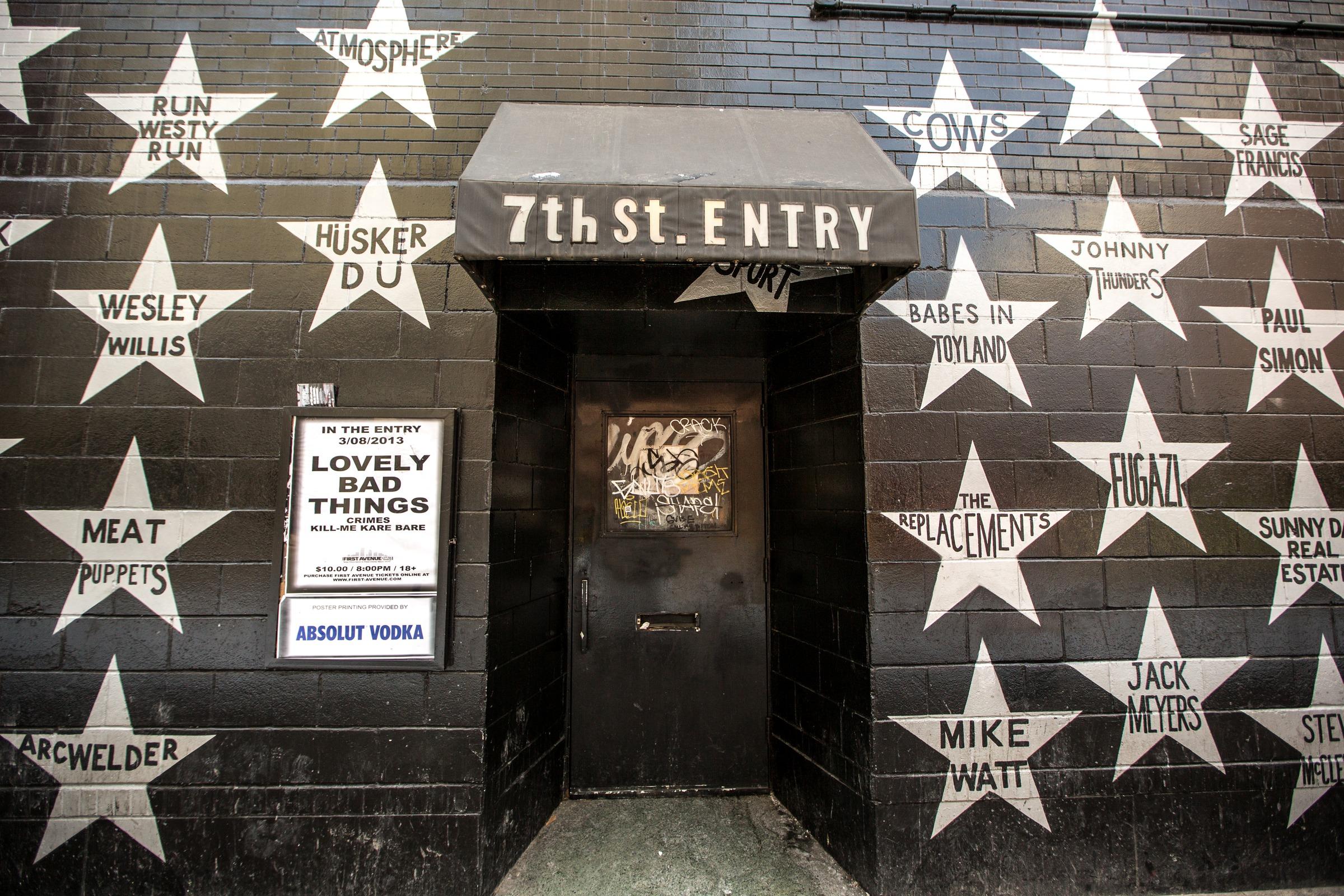
Start with what can be dated. First Avenue's own history of hip-hop places Run-D.M.C.'s Minneapolis debut in the Mainroom on 28 December 1983. The trio was paid $1,150. Their debut album would not arrive until March 1984, which means the club booked them before the record existed. The date also sits just after Prince finished filming Purple Rain in the same room.
That is the venue's claim, and it is a strong one: a downtown club, open since 1970, putting a New York rap group on its main stage in the same weeks it became the setting of a Prince film.
The local claim is messier, which is why it is more interesting. Derrick "Delite" Stevens moved from Jamaica, Queens to Minnesota in 1979, when hip-hop was still mostly a park phenomenon in New York. He has said there was no scene waiting for him. What he found was KMOJ, the only Black radio station in the market, where DJ James Andrews was playing Sugarhill releases. In 1982, at 14, he won a rap contest hosted by Kurtis Blow at Duffy's; first prize included a chance to open for Cameo. The win connected him with DJ D, a Bronx DJ who had also relocated, and the crew they formed became, in Stevens's careful phrasing, "one of the first, if not the first, rap acts to perform at First Avenue," around 1983 and 1984.
Notice the hedge. "First" depends on what you are counting: the first national rap act, the first local rap act, the first rap show, the first rap night that made money. Those are four different records, and none lives in a press release.
What the date documents is infrastructure. A scene needs three things: a room willing to book the music, a station willing to play it, and a circuit where performers can meet and compete. In 1983 the Twin Cities had all three. First Avenue had the room. KMOJ had the signal, and Travitron, another transplanted New Yorker, had a hip-hop show there. Duffy's had the contest that put a 14-year-old on stage with Kurtis Blow.
That combination explains what came later better than any founding date. Rhymesayers built a label and a weekly showcase at First Avenue that grew into Soundset, the festival that ran from 2008 to 2019. Atmosphere, Dessa and Brother Ali inherited a room that had already decided rap belonged in it.
The anniversary clip is not wrong. It compresses a decade of small decisions into a year and a venue. The useful correction is not to argue about who was first. It is to notice that the date works because the unglamorous parts were already in place — the radio show, the contest, the Wednesday booking, the $1,150 guarantee.
A first is a receipt. The scene was the transaction.